Showing posts with label democracy. Show all posts

Tuesday, December 24, 2013

NELSON


According to the Gini Index, the US is one of the most economically (income) unequal countries in the world, ranked around 40 depending on the year and type of inequality.  (Remember that by “economically,” we simply mean to what extent the society provides for its people.) The most economically unequal countries in the world include South Africa, ranked at #2, depending on the year and the ranking institution. I had the privilege of living in South Africa for a few years and seeing and experiencing first hand this inequality. When Madiba died a few weeks ago, it struck a chord with me, specifically because he spent his entire life fighting against inequality and injustice. Believe me, the system of apartheid was primarily an economically based system as much as it was a racial one. By that I mean that it had economic motivations and that it primarily dealt with the redistribution of society’s provisions for its people within South Africa. It was a system in which wealth was accumulated in the hands of a minority, an injustice which surrounded the life of this man, Nelson.

I think one reason I really like him is that most of the really amazing men and women, who are heroes to me, are dead. He’s the first of that caliber of people (like a Gandhi, Jesus, Teresa, Day, Romero, King Jr.) who was actually alive during my time, a person who I saw leave prison, a person who I saw work hard to fight for an end to apartheid even after coming out of prison, a person who helped his country transition peacefully to post-apartheid, democratic rule, a person whom I’ve met.

But even after briefly meeting the guy, I didn’t think much super-special of him at the time. I just knew he was a bit of a legend. Even when first arriving in South Africa to live and work, I didn’t think much. After all, just as you can see in this fellow Nigerian’s meeting with Madiba, I saw that South Africa still suffered from at least four, interconnected, debilitating problems: a crippling disease burden including rampant HIV/AIDS, TB, and malaria; a housing crisis in which so many poverty-stricken citizens lived in townships, shanty towns, and worse, informal settlements that were most vulnerable to disasters, crime, and disease; an economic inequality unrivaled by any other country other than maybe Namibia with most of the wealth concentrated in a minority of even the white minority; and, directly related to the economic inequality, a crime rate so high that house break-ins, car hackings, and muggings are just a question of “when” for people in Johannesburg and not “if.”

However, Nelson himself was quite aware of all of this, and he would respond that the end of apartheid is a victory enough, the first democratic elections were victory enough, electing the first black president of South Africa was victory enough. Most importantly, peacefully ending apartheid without any retaliatory bloodshed, and bringing the people together through peace and reconciliation fueled by forgiveness (and the work of the Truth and Reconciliation Commission—hugely important) was an immense victory. More importantly, the issues of economic inequality, crime, disease, and housing were going to take some time to work out and still are taking time to resolve. But none of that work that is now still going on would even be possible if South Africa, the Rainbow Nation, didn’t get past the first step, the paramount test—could a nation of various white, black, yellow, and brown ethnic groups come together, covered in forgiveness, walking in peace, as one nation? I will be the first to tell you it’s not perfect. There are still people who have no truly deep relationships with people of a different ethnic group, there are still Black people there that don’t trust white people, any of them. But I will also tell you the nation passed this first test. And that is due in large part to Nelson Mandela.

So it’s strange to me to think of someone, a bit of a giant, was alive during my time. Usually giants are magical beings, long dead, the stuff of legend and lore, myths. And as we know, it makes no sense to question whether a myth is true or not. That is completely irrelevant and a misunderstanding of what truth is. The only important question about a myth is whether it is alive or dead. Is it alive? Or is it dead?

Nelson, is a bit unlike some of the other giants of lore. He was married multiple times (never at the same time). But that’s weird to me. People like Romero and Teresa never married. And Gandhi and King Jr. stayed with the same spouse their entire lives. So it’s weird to think of that. It’s weird to imagine that Mandela has children who felt neglected by him due to his work or a son he never sees because in Mandela’s first divorce, the son sided with Nelson’s first wife. It’s a bit strange. But then when you look at all of our saints or my saints, none of them was perfect, not one. And yet, it’s not the perfection of the saint that sanctifies him or her, is it? No, it’s rather how the saint overcomes imperfections and, in spite of them, grabs onto some universal truth and begins to live life according to a reality that has not yet arrived. And yet, in that one life, that reality has arrived. It’s the very definition of faith. Faith, in the lives of these saints, in the life of Nelson, is not a belief of equality, it’s living life as if we are equal even though we are not yet. Nelson was able to live counter-culturally according to a reality that was soon to come and by living that way, so usher it in, so usher us into this imagined way. That is the work of a prophet. That is the work of a true saint. And it has nothing to do with perfection, it has everything to do with faith.

So is the myth, the legend of Nelson alive or dead? It’s very much alive, I say. And yet there are people who seek to kill it. So to them, I have a few words to address two of their invective points.

Terrorism - One of the reasons I love Nelson is because he stood for nonviolent love and peace to change the system. However, he had a brief period in which he felt this method was failing. To quickly recapitulate the happenings, in 1948 the National Party instituted legalized segregation practices starting the system we call apartheid. By this time Mandela had been married for around 4 years to his first wife. In 1952, he opened up a law practice and helped to defend people attacked or oppressed by the apartheid state. He and Oliver Tambo campaigned against apartheid and in 1956 Mandela and 155 other activists were charged with high treason. During the 4-year trial, Mandela divorced from his wife in 1958 after having four children and 14 unhappy years with his first wife. He married Winnie Mandela in the same year. The charges were dropped in 1960 after 4 years of the trial. Resistence to apartheid grew especially after the Pass Laws which required blacks to have a pass (think passpoprt) which restricted where Blacks could live, work, and travel. In the same year 1960, the ANC (African National Congress, Mandela's political group) was banned and he went underground with his activities. After the Sharpeville Massacre in 1960 in which 69 young Blacks were shot dead by police, Mandela felt that you couldn’t use nonviolent responses against a regime that was killing your own people. So he resorted to targeted sabotage or economic sabatoge. They would target particular government facilities or a bridge, for instance, and bomb it when there was no one around or in the building or location. He only participated in this for about 2 years before he was arrested a second time and went on trial again. (Some sources say he shifted from economic sabotage to full guerilla warfare before being captured.) It was in this trial that he gave a famous 4-hour speech before he and 11 other saboteurs were convicted to many years in prison starting in 1964.

So that is the background. First, I want to say that terrorism is relative, sadly. I wish it were absolute, but we all know of the trouble that the UN has had to create a single definition of terrorism. Any definition of terrorism that is or has been proposed is one in which some countries are incriminated by it (this includes the United States) and so there is no one definition by which every one, every country can or will agree. So the term, unfortunately, is left to the decision of history (which can be biased of course). As the song “Wonderful” from the musical Wicked says,


A man's called a traitor - or liberator
A rich man's a thief - or philanthropist
Is one a crusader - or ruthless invader?
It's all in which label
Is able to persist
There are precious few at ease
With moral ambiguities
So we act as though they don't exist


So often winners of wars become freedom fighters instead of terrorists. Losers remain terrorists. In the case of South Africa, if the world supported apartheid and it was upheld, maybe freedom fighters would be called something else. Today they are praised because the apartheid regime was dismantled and is and was viewed as evil. However, I do applaud people who try to use an absolute definition of terrorism. So the question remains. Was he a terrorist? My first point is that if we keep an absolute definition, we must recognize the apartheid state of South Africa as terrorizing and terrorist. Murdering and massacring Black South Africans would count for me. Secondly, Nelson and his group did targeted economic sabotage (liberation without bloodshed), avoiding citizens which doesn’t fall into the category of terrorism (though they were trying to “terrorize” the government, in a sense, to free non-whites from apartheid and give everyone a vote). Third, a major problem is that people seem to attribute killings by more extreme South Africans to Nelson Mandela while he was behind bars. Yes, pe
ople kept pushing for an end to apartheid after Nelson went to prison. Some were extreme in their methods including full guerilla warfare. Yes, Nelson kept in touch with people from prison, but he was not running the organization from prison in any real way. Rather the organization was using him and his name and situation as a rallying cry, an inspiration, a wrong around which to motivate people to act. Fourth, even if he were to have been a terrorist (which he was not), judge the man not by one particular phase in life, but by the man he became. This is the man who worked hard and learned Afrikaans while still in prison to understand and empathize with white South African Afrikaaners including his jailers. This is the man who preached forgiveness and reconciliation while still in jail. This is the man whose white captors wished him well and respected him and liked him. This is the man who embraced extreme black and coloured South Africans when they were captured and sent to the same prison, even when more moderate freedom workers wanted to exclude the extremists in prison. This is the man who told everyone to put down weapons and not to rise up and fight at all when he got out of prison. Nonviolent change. Not terrorism.

Communism - Yet, Margaret Thatcher dismissed him as a terrorist, and initially he was not supported by the U.S. government. This is one of those times as a student of the world, you begin to understand that democracy is not synonymous with freedom and communism is not synonymous with oppression. So when governments like the U.S. promulgate that they are in a particular country to spread democracy which is freedom, always try to read between the lines and understand ulterior motives of all sides. In the plight of non-white South Africans, ask yourself an important question: was Democracy or Communism on the side of freedom for these South Africans? Well, if you don’t know, it wasn’t the democracy of the United States. It was the communist regime of Cuba, the dictatorship of Gaddafi, and Yasser Arafat of the PLO. The thing is that if the democracy of the US is truly equated with freedom, it would seek out and support freedom movements whenever and wherever they are. It may not support certain methods, but definitely the ends should be supported. However, there are other geopolitical concerns of nations like the U.S., and so Mandela and the freedom movement took help and support wherever they could receive it. Mandela famously said in a town hall meeting at NYU in 1991 “The mistake that political analysts make is that they think their enemies are our enemies.”


Nelson was not a communist. It’s possible to see him as a communist sympathizer and some sources say he joined the party for a short time. He definitely read widely including from communist leaders. He took help from whomever offered help. And because the PLO and even Castro’s group in Cuba were primarily seen as liberation movements, there was an immediately identity-based connection to those groups. In other words, the fear that we should not let communism take hold in Africa because it will be a threat to freedom is a bit . . . strange. If you fear freedom is threatened, you support freedom where you see it. If you don’t, then the reverse can be said of you by communists. In reality, the Cold War between the US and Russia, especially, fought in Africa often was not honestly framed when framed as freedom vs. oppression, not if the US supported oppressive regimes or failed to support the freedom of particular peoples. In this way, Nelson took help from these groups without explicitly questioning their internal affairs. When critiqued,
he once said that it is hypocritical to accept that black and coloured South Africans take help from the US without questioning the internal race relations problem and inequality and discrimination in the US (yes, even in the 1990s) and to reject when South Africans take help from Cuba or Libya or the PLO without questioning their internal issues. His paramount concern was gaining freedom for his people and he didn’t feel he was in a position to critique those people and groups (including the US) before apartheid ended. When asked if he would support a communist or capitalist system when South Africa was freed, he admitted that he has no allegiance to any system, he only cares about what works. I like this. He was not into labels which allowed him to work with Communists or Democracy-proponents. He was not a communist as one committed to an "ism". Interestingly enough, if you go to South Africa today, communists are a welcome party in South Africa and communist ideas or quotes by famous communists are a part of the dialogue in a much more open way than in the U.S. today.

Yes, he was stubborn. And he was loyal to friends who supported him even when they acted poorly. His paramount concern was freedom and first enacting or enabling that. It’s another trait of a saint—universalism. Look at the quote that has been over quoted in the past few weeks after his death.


“During my lifetime I have dedicated myself to this struggle of the African people. I have fought against white domination, and I have fought against black domination. I have cherished the ideal of a democratic and free society in which all persons live together in harmony and with equal opportunities. It is an ideal which I hope to live for and to achieve. But if needs be, it is an ideal for which I am prepared to die.”


What is great about this mythical and truthful quote, yes, is the fact that he is willing to die for this act of creative and prophetic imagination—a nation where we all come together and everyone has a voice. I know a lot of people who are willing to fight for such things, but I don’t know many (almost none) who would be willing to die for it (not kill for it). This is what sets him apart. I keep asking myself if I can say that about anything or if I could have said that at that time, that I would die for democracy, die for true freedom. I don’t think I can or could. I don’t think I would have said that. I would have wanted that to be true for me, it’s such a purely noble thing, but I don’t think I’m there yet. One day, maybe.


But the greatest part of the quote is perhaps many times eclipsed by the end of the quote. Look at his words. He says “I have fought against white domination and I have fought against black domination.” This was not in the 90s. He said this back in the 60s. This is universalism at its best. He is saying, his fight isn’t against white people, that’s too proximate, local, temporal, and provincial. His fight, to be a true fight for freedom, is a fight against oppression, wherever it is found, whoever commits it. This is a great truth he is grasping. This is universalism. It’s why people who say they are on the side of freedom should oppose oppression itself, anywhere, anytime. And it shows a keen understanding he has experienced of oppression. A
n oppressive system enslaves both sides: it is not only the oppressed that need to be freed, but the oppressors also need to be liberated. Thank you, Madiba.
EGYPT

At the moment, I’m in an Ethiopian airport on my way to Tanzania. However, I’m actually only here because a wedding trip to Egypt was canceled. Instead of celebrating a beautiful union, I instead watch the noise of the turmoil and growing turmoil there in the country. The reaction to the turmoil reminds me of the importance of being honest.

While meeting in London with a Kenyan friend who is studying at Leeds, we began to talk about international issues since he’s earning a Masters in international economics (or something similar). The one thing he kept reiterating to me over and over again is that people around the world like the US but they find the country too hypocritical.

Hypocrisy.

I remember the first time a university professor explained this important and true rule: whenever the geopolitical interests or agenda of the U.S. conflict with its ideals, the U.S. chooses the geopolitical interests. At that time I didn’t know many examples of this but I soon began to learn of them from studying and reading modern history especially from WWII up to the present (and even before). Truth be told, this is not specific only to the U.S. However, it is more noticeable with superpowers and superpowers who so vocally tout their ideals and their goodness to all the world. So when the military ousted the president of Egypt from office, there was a conflict.

On the one hand, in a strange way, it’s actually great that the people have power like that because it really keeps the leaders accountable. The UK and the US, among others, don’t really like the Muslim Brotherhood. So the ousting was seen as a bit of a relief. Add to that the fact that the economy had not really improved under the president and he was consolidating a lot of power under his control and away from other bodies like the courts. Besides, goes this line of thinking, a democracy is about giving the people a voice, and this is what the people want. It’s true that the Muslim Brotherhood did not win the presidency by a large margin. So it only takes a certain percentage of disgruntled voters to put the majority of the population against President Morsi. Accordingly, this line of thinking sees throwing the president out as a “democratic” move, the voice of the people.

And there’s the rub. In a democracy, every voice is heard, but every decision does not reflect every voice. Every decision is supposed to be informed by all the heard voices. Then a decision must be made, a particular direction taken. Secondly, in a democracy there should be a democratic process by which you can vote someone out of office for doing a bad job. We usually call this “the next election.” Thirdly, in a democracy there should be a democratic process by which you can vote someone out of office for doing illegal or unethical acts. We usually call this “impeachment.”

So it begs the question: if it fits the textbook definition of a coup, why not call it a coup?

This of course is a bit complicated and deals with the fact that the U.S. is obligated to stop the sale of arms to Egypt while in the state of a coup. Not only is the US arms trade a profitable business, but some view it as a stabilizing force in the region. Stop selling arms to Egypt and who knows what will happen. I’m going to ignore the validity of that statement for now as we can discuss it another time. What concerns me at the moment is what would have happened if the president were from a political party that the U.S. supported and favoured? What would have happened if a president from this favoured and supported party was ousted? Would it be a coup then?

And if the answer is yes, then that means that the definition of a coup and our support is not based on our ideals, but rather on our geopolitical agenda.


In other words, if the answer is yes, our actions are not based on democracy but on whom we like. And that’s a strange place to be, to
believe. Because hypocrisy always comes to bite you back.

Sunday, February 12, 2012

CHANGES

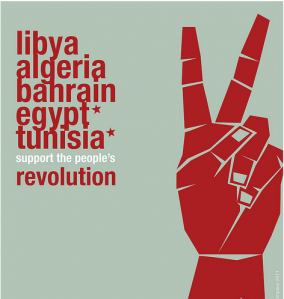
People have asked me to talk a bit about the situations in the Middle East and North Africa, the so-termed “Arab Spring.” From the moment that Tunisian peasant farmer set fire to himself in pure, unadulterated frustrated I’ve been pondering leaders and leadership. So if you were looking for the traditional or usual perspective or directional look at the happenings in this part of the world, sorry. You won’t get it here.

I’ve thought a lot about these leaders, and one lesson I’ve learned from studying countries around the world is that leaders do not like to give up the leadership. I’m specifically talking about leaders of countries. With all of the criticism (in some places) and bad publicity (in some places), leading a country is quite. . . good. It’s a nice job. You get paid a whole bunch of money. You live well. While thinking about this I tried to think of any country in the world, even a poor country, where this is not true. I cannot think of one. I cannot think of one country in which the head, president, king, or prime minister is poor even if the country is relatively poor. Not one. So the allure of being the head of a country can be even greater in a country where people are suffering. You may literally live like a king relative to your people (don’t think this doesn’t include Western countries; it does in a different way).

So naturally, when you look at the history of countries since independence you will find leaders who have led countries for a very long time. A very. . . very long time. Thank goodness many have finally been sent away or kicked out, but there are still some who are currently reigning. Reigning.

In the Maldives, Former President Gayoom served for 30 years before violent protests caused him to allow multi-party elections in which he lost in October 2008 and handed power over in November 2008. It was the longest running “dictatorship” in Asia.

In Indonesia, General Suharto ran Indonesia for around 30 years since 1968 before resigning in 1998.

In Cuba, Fidel had led since 1959 for around 50 years before his brother Raul took over due to ailing health.


In Egypt, Hosni Mubarak took over after the assassination of Sadat in 1981. Mubarak ruled for almost 30 years. Protests similar to those in Tunisia began on the 25th of January running for 18 days. On the 28th of January, the Egyptian government eliminated internet access in an attempt to deal with the protests. After President Mubarak dismissed his government (similar to Jordan, Syria, and Yemen; Mubarak later appointed a new cabinet), protests began to turn violent, still calling for Mubarak’s resignation. By the 10th of February, Mubarak agreed not to run for re-election. With continued protests, he decided to cede power immediately to the Army which suspended the Constitution, dismissed Parliament, and agreed to lift the emergency law (similar to situations in Syria and Algeria). On the 4th of March a Essam Sharif, a civilian, was appointed interim Prime Minister, but protests continue into this month (July 2011) as reforms are perceived to be slow. Now, initially detained for questions on corruption and abuse of power, he is set to undergo prosecution for murders during the revolt of 2011. Mubarak is in the hospital for failing health; news surfaced on the 17th of July, that he had gone into a coma. With a population of 81.4 million, Egypt experienced 846 deaths (conservative minimum estimate) during the protests from January to February.

In Tunisia, Ben Ali had been in power for about 23 years when one man, Mohamed Bouazizi set himself on fire in utter defeated frustration with poor conditions in the country—food inflation, high unemployment, poor living conditions, etc. This set off a series of protests and demonstrations which were often met with police action resulting in deaths and injuries as reported by the media. Eventually Ben Ali fled on the 14th of January, seeking exile in Saudi Arabia. Originally, a caretaker (interim or transitional) coalition government took over and a state of emergency law was declared. But the 5 non-ruling party members resigned almost immediately. Since protests continued, Prime Minister Mohamed Ghannouchi removed all ruling-party members from the government (excluding himself). Then the ruling party was suspended on the 6th of February and terminated on the 9th of March. Finally Prime Minister Mohamed Ghannouchi resigned, and he was replaced with a non-ruling party person, new Prime Minister Beji Caid el Sebsi. With a population of 10.5 million, Tunisia experienced a reported 219 deaths during the protests from December 2010 to January 2011.

Today, we still have long-time rulers who still have not left. Mubarak was an excellent example before recent happenings. The quintessential example today is Mugabe.


In Equitorial Guinea, Teodoro Obiang has been the head of that country for 31 years after a bloody coup in 1979. He’s led longer than Mugabe in Zimbabwe, and can be argued to have the worst “dictatorship” in the African continent.

In Swaziland, King Mswati III has ruled for 25 years since 1986. It’s the last absolute monarchy in Africa, so he will rule until he retires his crown or death.

Kim Jong Il has led North Korea for 17 years since 1994.

In Burma, Than Shwe has been in power since 1992 for around 19 years.

In Zimbabwe, Robert Mugabe has run the country since 1980 for a total of 31 years this year. Originally Mugabe was hailed as a liberator who would usher in the dual themes of liberation (exodus) and a new beginning (new genesis). As so often happens, however, Mugabe helped lead a liberation from Britain but to another tyranny (a new oppression) reverting to a thematic wilderness. Last time I checked the unemployment was 70+% and inflation was about 500%.

In Syria, a secular single-party state, President Bashar al-Assad has ruled for 11 years now, since 2000. He’s the son of the former president, Hafiz al-Assad, upon whose death, in 2000, Parliament amended the constitution changing the minimum age of the president from 40 to 34. This allowed Bashar al-Assad to become president. Why do I mention this? After all, 11 years is not a long time and people expected Bashar to usher in new reforms. Well, Hafiz al-Assad ruled for 30 years, and Bashar al-Assad, in hindsight, is not seen as very different from his father given that he has only brought in a few market reforms. Add to that Syria’s record on human rights abuses. Following the revolts in Tunisia and Egypt, protests started in Syria on the 26th of January, 2011. And they were mostly peaceful. Actual violent unrest started in March 2011, when government forces used force in attacking protestors. On the 29th of March, the entire cabinet was asked to resign by the president and he installed a new cabinet (similar to Jordan and Yemen). The violence and fighting is ongoing, and with a population of about 21-22 million, 1300 people have died in this revolution (not counting security forces). Websites like Twitter and Facebook are banned there, activists are arrested, bloggers are detained, travel can be banned. There are complaints of gender equality violations especially related to the law and penal code. On the 18th of May, 2011, President Obama issued sanctions against al-Assad and six other senior officials. Later, the US Department of Treasury added more sanctions against Syrian and Iranian intelligence officials.

In Yemen, there also exists a presidential system as in Syria. President Ali Abdullah Saleh originally served as the president of North Yemen (Yemen Arab Republic) from 1978-1990. After unification he was named the first president of Republic of Yemen, and has been the only president. So you could say he’s been president for 21 years. Some would say 33 years. Actually, let’s be honest, most people consider him to have ruled for over three decades. Protests began in Yemen because of lack of democratic reform, corruption, and human rights abuses. Yemen’s story seems even wilder than that of Syria. Due to protest, on the 2nd of February, 2011, Saleh announced he wouldn’t seek re-election after finishing his term through 2013. But government attacks on protesters led 11 ministers of Parliament to resign on the 23rd followed by 2 more MPs and 2 deputy ministers. Violence continued, and the President fired the cabinet on the 20th of March, asking them to continue to serve until there was a new government. On the 23rd of April, he agreed to step down after a 30-day transition that would hand power over to his vice president as long as he received immunity from criminal prosecution. After agreeing to sign a deal with the opposition on the 18th of May saying he would hand power over in a month, he changed his mind on the 23rd of May and refused to sign. Sadly, there was an apparent RPG attack on his compound in which four body guards were killed, leaving his prime minister, deputy minister, governor of Sana’a and himself injured. Even after a collapsed lung and burns on a reported 40% of his body, he maintains power setting his vice president as acting president. To date, excluding deaths between security forces and other armed groups, 200 have died in the ongoing unrest of this small country of 24.1 million.

In Bahrain, we encounter a constitutional monarchy ruled by the Al-Khalifa royal family. This royal Sunni-led government doesn’t proportionately represent the Shia percentage in the populace and most of those who started protested on the 14th of February, 2011, are from the Shia sect of Islam. Five people were killed when police raided the protest area on the 18th and after media scrutiny, Bahrain decided to move the protesters to a financial district which would allow the use of the Peninsula Shield, a military body made up of Saudi Arabian military and other Gulf Cooperation Council (GCC) member militaries. That is what happened. On the 14th of March, troops from UAE and Saudi Arabia entered Bahrain purportedly to protect oil and gas facilities. The Bahraini government began a “crackdown” as worded by the Bahraini government. This belong a period of alleged arrests, tortures, and deaths. On the 23rd of June, a group of protestors were sentenced to life in prison. The uprising in Bahrain was squelched. With a population of 1.3 million, their death toll is about 29 from February to June 2011. Sixteen of the 29 were reported as linked to unrest.

In Saudi Arabia, we find an Islamic absolute monarchy. And when I write “absolute,” I mean absolute. Everything is controlled by the royal family, the House of Saud, led by King Abdullah, in power since 2005 after the death of his half-brother. The House of Saud is large enough to occupy most of the positions of governments with over 7,000 princes in position. Most of the power is held by the 20 or so princes who are direct descendants of King Abdul-Aziz bin Saud, the founder of Saudi Arabia. King Abdullah offered asylum to the deposed Tunisian President El Abidine Ben Ali. Between January and July 2011, Saudi Arabia has had protests over labor rights, women’s suffrage, governmental reform (anti-absolute monarchy), the release of prisoners, and women’s driving. However, the government has used favors or benefits to try to mollify the citizens. He has given funding to offset some student loans, fight high inflation, help unemployed young Saudi citizens, fund housing loans, provide a 15% pay increase for state employees, and help Saudi students studying abroad. This has been on the order of roughly 10.7 billion dollars.

In Morocco, there exists another technical constitutional monarchy as in Bahrain. The king has vast powers. King Muhammad VI is the current ruler, reigning for 12 years. Before him, his father, King Hassan II, ruled for 38 years beginning in 1961. Just as elsewhere, protests broke out in Morocco. On the 30th of January, 2011, at least four protesters set fire to themselves at a rally in Tangiers. Later on the 20th of February, 37,000 gathered in Rabat to protest for political reform. King Muhammad VI announced he would establish a committee to focus on power-limiting, constitutional reform. However, on the 2nd of July, 2011, protesters still said their cause remained since the constitutional referendum that easily passed did little to loosen the chains of autocratic rule. The difference in Morocco, however, is that the people do not seem to hate him as some did in Egypt or do in Libya.

In Algeria, President Abdelaziz Bouteflika presides over a semi-presidential republic. He’s been in power since 1999, for 12 years. Recent protests began on the 29th of December, 2010, in Algiers, over the lack of housing. It became violent and there were 29 arrested and 53 injured. Protests continued followed by a wave of self-immolations in January 2011. To deal with all the unrest, on the 3rd of February 2011, President Bouteflika announced an end to a 19-year long Emergency Rule (similar to Syria). The cabinet fulfilled this on the 22nd of February, lifting Emergency Law. On the 15th of April he announced he would work for democratic reform.

In Libya, we are confronted with Muammar Gadaffi. And to be honest, I’m not even sure what type of government it has. It’s non-traditional due to the ongoing civil war that has resulted due to the uprisings in Libya. Needless to say, Gadaffi had been in power since he led coup at the age of 27 years back in 1969. He’s run the country for 42 years. People are tired. Protests started on the 15th of February, spread to Bengazhi (2nd largest city) by the 18th where the opposition controlled the city. Unfortunately the government began to use force to take back the city though it was initially repelled. Protests spread to Tripoli (capital) by the 20th of February. Rebels set up an interim government on the 26th of February while the government began to take back much of the coastline of Libya. By March 17th, the UN declared a no-fly zone over Libya, and France, the UK, and the US initiated a bombing campaign which was joined by a 27- European state coalition. The rebels recaptured much of the coast due to the bombing campaign, but the government mounted a counter-offensive and retook them. Fighting still continues in 3-4 different areas—the Nafusa Mountains in the west, the Misrata District, the Gulf of Sidra, and perhaps now in the Libyan Desert. The death toll has been difficult to pin down partly because humanitarian groups are not allowed in certain parts of the country and both sides sometimes exaggerate claims of deaths to bolster their cause.

The list goes on—Qatar, Oman, Jordan, Lebanon, Iraq, Kuwait, Mauritania, Sudan, Western Sahara, UAE—they have all had petitions, demonstrations, protests, or grievances related to all that is happening.


So when I look at all that is going on, I remember that it has always been going on whether certain countries and media and leaders call attention to it today or not. More than that, I’m reminded that leaders love their jobs and they don’t want to let them go. In the past it used to be easy to hold on to power. That was before the spread of communism ended, before international aid and democracy wed, before democracy preceded legitimacy.

All of a sudden, there was immense pressure on leaders of independent nations to prove legitimacy, to open the rule to democracy. What did they all do? They decided to hold elections.

Elections? What’s wrong with that? And what else did they do besides elections?

Nothing. That’s just it. They just held. . . .elections. Elections.

In order to usher in democracy, leaders held elections. The implicit message is that democracy is elections. Elections are democracy. It’s a false message. And history has shown us this. Let’s look at why.

The turning point seems to be the end of the Cold War. Before the end of the Cold War, many leaders of countries in the bottom billion held power because they led rebellions or coups or military dictatorships. But after the end of the Cold War, democracy became fashionable. Everyone wanted one. Why? Well, I know of at least two reasons. First, it lent legitimacy to your rule on the world stage. If you wanted to be respected as a leader who felt the heartbeat of his people or one who followed the will of the people, you needed a democracy to show the world this was so. Secondly, more international aid money began to be tied to democracies or at least the promise of democracy (The Millennium Challenge Corporation of the US government is a good example of a public corporation that ties grants to governance indicators). Moreover, elections have been treated as the healing salve or the reconciliatory action needed for peace in post-conflict situation. So with this expectation—the expectation that an election conferred legitimacy on the ruler and that any winner had to be the person who reached out the most to all diverse parties (not even true in the U.S.)—it became the fashionable thing to do. It was “all the rage.” All the leaders had to have an election. But would they win?

You put yourself in the position of an advisor to such a leader who has led your country for 20 years since the revolution. In the past 20 years, your country has sunk to having the worst debt to GDP ratio in the world, unemployment has reached 50% and inflation—well hyperinflation—is 320%. People go to the stores with suitcases of cash and no one trusts the banks. Your fearless, benevolent leader asks, “Do the people love me? Will I win?” What do you say? If you’re the normal obsequious advisor, you have no idea if he will win because it has never been your job or your leader’s policy to gauge public opinion. If you say no, you’re in trouble: haven’t you been telling him how much people love him all these years? You risk losing your job or your life. If you say yes, you’re lying and risk losing your job or life if your boss loses the election.

Three autocrats—Habibie in East Timor (Habibie replaced Suharto), Kaunda in Zambia, and Mugabe in Zimbabwe—all decided to hold elections because they thought they would win. Let’s see what happened.

Well, the first autocrat to give the elections a try after the Cold War was Kenneth Kaunda in Zambia. I think he thought he would win, but he didn’t. He lost overwhelmingly in 1991. According to Paul Collier, Jimmy Carter was in the country with a group of election observers. As the results came in, Carter (who has been in a similar situation himself) went to the presidential palace and stayed there until it was too late to annul the election results. Who knows what would have happened otherwise? Collier reports that it is reported that Kaunda then went around Africa advising presidents not to make the same mistake he did—having an election. Imagine that!
Suharto fared worse. He resigned in 1998 amid waning support from civilians and government. After leaving office, his successor, Habibie, overwhelmingly lost in East Timor. The people there wanted and voted for independence (78.5%) over becoming an autonomous state/province of Indonesia and keeping Habibie as their leader. Though they have had to endure civil war in 2006, they currently have their independence.
Mugabe followed the trend of setting up a constitution with term limits and multiparty elections. Most leaders did this willingly believing they had enough time to change the constitution before the term limit kicked them out of office. And many succeeded. President Deby of Chad extended his term past the original two-term limit through a referendum in 2005, though many people complained of voter irregularities and media censorship. In the same year, President Museveni of Uganda lifted the two-term limit and managed to extend his current 24-year reign (he just won elections, again, this past February). In Algeria, Abdelaziz Bouteflika held a referendum in November 2008 and Parliament lifted the two-term limit on presidents allowing himself to run and win a 3rd term; he’s served since 1999. Hugo Chavez of Venezuela, elected in 1998, was bound to only two terms by the 1999 constitution; luckily he held a referendum in 2009 and the people voted to allow a president to run indefinitely. He’s now on his third term.


Do you see the trend?

But some leaders are not so lucky. But they can still be crafty. President Putin of Russia escaped the term-limit time bomb by not even worrying about changing the term limit. He just created a new position of prime minister, placed himself as prime minister and effectively shifted power from the presidency to the prime ministry. Wow. Do you remember that? I’m still marveling.

Others tried and weren’t as successful. Zambia’s 2nd president, President Chiluba, left office after his 2nd term ended in January 2002. The debate over allowing more than 2 terms never became a referendum and never was made a motion in the house.

In 2007, President Obasanjo of Nigeria was determined to change the constitution to allow a third presidential term. His vice president, however, had obvious reasons for not wanting that to happen. So the vice president used his influence with the Senate to try to stop them from allowing a third term since such a change requires Senate approval. It was a close and hotly contested vote, but the Senate voted not to allow a third term. President Obasanjo did not want there to be any choice other than himself. And if that were not the case, he definitely did not want his vice president to be the successor. But with less than 12 months left before the election, he had his work cut out for him to take someone from anonymity to victory in such a short time. So Obasanjo told his party it was “do or die” time. Professor Paul Collier interprets this as a “no holds barred” message.

But how do you win an election in less than 12 months with a no-name person against a well-known incumbent vice president? One answer we often say in the U.S. is that you need a lot of money (elections are decided by money). The problem was that over the past three years, Obasanjo had put in place reforms that were showing some fruit. Ngozi Nkonjo-Iweala was the Minister of Finance and Oby Ezekwesili was in charge of public procurements. Together they had shut down sources of slush funds (including overseas sources) that one needs in order to run a campaign in this situation. Now watch this! When President Obasanjo was not allowed to run for a third term, what did he do? He shifted both Ezekwesili and Obasanjo away from the control of government money leaving only one brave anti-corruption government official—Nuhu Ribadu, head of the Economic and Financial Crimes Commission. Bravely (though some might think stupidly), Ribadu attempted to prosecute James Ibori, the head financial supporter of Obasanjo’s chosen successor. Ribadu was ousted 3 months later.

So what do you do when you have to win an election and the message from the party is “do or die?” I want to look at the options that Professor Paul Collier puts forth in his book “Wars, Guns, and Votes.”

OPTION 1: TURN OVER A NEW LEAF AND BECOME A GOOD GOVERNMENT
Pros: This is probably what people want. I feel good and leave a legacy.
Cons: I don’t know how to do it. The skills I’ve developed are patronage politics. I have to read donor reports and my civil service can’t implement the change we need. I’ve spent years squeezing all honest people out of government. All the sycophants I surround myself might not put up with this and might start a coup against me. Plus of all the rich country donors I know, when they try this option they only win 45% of the time.

OPTTION 2: LIE TO ELECTORS
Pros: I control most of the media so it’s no problem, and my people don’t have enough good education or reference points to tell how bad things really are.
Cons: Nothing has changed for years, so people discount everything you say and see you as a liar already.

OPTTION 3: SCAPEGOAT A MINORITY
Pros: This has a proven track record (look at Mugabe) especially in highly diversely ethnic populations (most bottom billion countries and they always have ethnic minorities to scapegoat). You can always show favoritism to my own group.
Cons: Some of your friends are from the ethnic minorities and you prefer business from ethnic minorities because no matter their wealth, they don’t dare challenge you politically. You want to keep the major ethnic groups out of business. Minorities may leave if you try this tactic.

OPTTION 4: BRIBERY
Pros: You’ve got more money than the opposition so this works.
Cons: Can you trust people to honor the deal? Will they vote for you?

OPTION 5: INTIMIDATION
Pros: Most people are not brave and back down due to thugs. You might not be able to determine how people vote, but you can tell if they vote especially when you know the identity of your opposition. In the last Kenyan presidential elections, President Moi used intimidation to force a group of Kikuyu living in the Rift Valley to move as they were likely to vote against him. Mugabe has also used intimidation against voters. (Intimidation tends to be the tool of those in power while challengers or opposition tend to use more violence in the bottom billion societies.)
Cons: It might get violent. And the opposition has more numbers (otherwise you wouldn’t have to worry about winning). You don’t want to risk losing in violence.

OPTTION 6: RESTRICT THE FIELD TO ECLUDE THE STRONGEST CANDIDATES
Pros: You get to directly attack your opponents. Corruption charges might work as you can look quite good to the international community that always complains of corruption (and corruption might actually be true). Or you can try citizenship since many of the bottom billion countries are highly ethnically diverse; you can make up false ancestry charges. You can debar everyone like President Abacha of Nigeria did once. In the end you can even try assassination of your opponents just as what happened in 2007 in the run-up to the Pakistani elections which seemed to be leading to a potential Benazir Bhutto victory.
Cons: People always have an alternative vote to you. Is that sufficient to ensure victory?

OPTTION 7: MISCOUNT THE VOTES
Pros: You can’t lose her. Plus it reinforces other strategies because people have less incentive to reject bribes or risk opposition if they will lose anyway. You can also hold this option until the last minute when you see that you will lose the election. This happened in Kenya in the 2007 presidential elections. As the parliamentary constituency results were declared, the opposition increasingly looked set to win. However by the time the national total was formed from the constituency votes to determine who would be president, the incumbent president magically and narrowly won.
Cons: The international community won’t like this especially if international observers note such irregularities. For example, the EU was upset after the Kenyan 2007 election results. In one constituency, the vote for the president was initially announced as 50, 145, but it was recorded as 75,261 in the final tally.

These are just a number of options that Professor Paul Collier goes through in the thought process of a leader who wants to continue power engage in façade-democracy. Again, the whole point of this was to remind us that democracy is more than elections. Otherwise, all countries with elections would have people at all social and economic levels whose voices were heard and who were represented by some type of political party or group. That’s not the case. And often times votes and elections are linked to violence especially civil wars and coups which can be endemic in small countries in the bottom billion.

The trend is clear, presidents and leaders of countries live a pretty amazing and blessed lifestyle and no one wants to give it up. So people do what they can to retain power. When President Mugabe of Zimbabwe discovered that he lost the referendum to lift the term-limit rule, he began to work at eroding the power of the government: he forced chief justices into early retirement and appointment people to hold their place. This allowed him to ignore property rights (and snatch properties) as well as to employ hyperinflation because all the checks and balances were removed.

So, leaders love their power, position, and pursuit of happiness. I know some leaders did step down. But I would not have expected Gadaffi or al-Asad to step down. Every leader and every country situation is unique, but most leaders will hold on to it as long as possible. Moreover, I’m more cautious of the term “Arab Spring.” I realize that just because someone resigns or flees, it doesn’t mean that the succeeding government will be more democratic or politically balanced between groups and factions and parties. Still, I sure hope so. It doesn’t mean any absolute monarchies will move toward constitutional monarchies. Still I sure hope that process continues in that direction. Only time will tell.