Showing posts with label US. Show all posts

Tuesday, December 24, 2013

EGYPT

At the moment, I’m in an Ethiopian airport on my way to Tanzania. However, I’m actually only here because a wedding trip to Egypt was canceled. Instead of celebrating a beautiful union, I instead watch the noise of the turmoil and growing turmoil there in the country. The reaction to the turmoil reminds me of the importance of being honest.

While meeting in London with a Kenyan friend who is studying at Leeds, we began to talk about international issues since he’s earning a Masters in international economics (or something similar). The one thing he kept reiterating to me over and over again is that people around the world like the US but they find the country too hypocritical.

Hypocrisy.

I remember the first time a university professor explained this important and true rule: whenever the geopolitical interests or agenda of the U.S. conflict with its ideals, the U.S. chooses the geopolitical interests. At that time I didn’t know many examples of this but I soon began to learn of them from studying and reading modern history especially from WWII up to the present (and even before). Truth be told, this is not specific only to the U.S. However, it is more noticeable with superpowers and superpowers who so vocally tout their ideals and their goodness to all the world. So when the military ousted the president of Egypt from office, there was a conflict.

On the one hand, in a strange way, it’s actually great that the people have power like that because it really keeps the leaders accountable. The UK and the US, among others, don’t really like the Muslim Brotherhood. So the ousting was seen as a bit of a relief. Add to that the fact that the economy had not really improved under the president and he was consolidating a lot of power under his control and away from other bodies like the courts. Besides, goes this line of thinking, a democracy is about giving the people a voice, and this is what the people want. It’s true that the Muslim Brotherhood did not win the presidency by a large margin. So it only takes a certain percentage of disgruntled voters to put the majority of the population against President Morsi. Accordingly, this line of thinking sees throwing the president out as a “democratic” move, the voice of the people.

And there’s the rub. In a democracy, every voice is heard, but every decision does not reflect every voice. Every decision is supposed to be informed by all the heard voices. Then a decision must be made, a particular direction taken. Secondly, in a democracy there should be a democratic process by which you can vote someone out of office for doing a bad job. We usually call this “the next election.” Thirdly, in a democracy there should be a democratic process by which you can vote someone out of office for doing illegal or unethical acts. We usually call this “impeachment.”

So it begs the question: if it fits the textbook definition of a coup, why not call it a coup?

This of course is a bit complicated and deals with the fact that the U.S. is obligated to stop the sale of arms to Egypt while in the state of a coup. Not only is the US arms trade a profitable business, but some view it as a stabilizing force in the region. Stop selling arms to Egypt and who knows what will happen. I’m going to ignore the validity of that statement for now as we can discuss it another time. What concerns me at the moment is what would have happened if the president were from a political party that the U.S. supported and favoured? What would have happened if a president from this favoured and supported party was ousted? Would it be a coup then?

And if the answer is yes, then that means that the definition of a coup and our support is not based on our ideals, but rather on our geopolitical agenda.


In other words, if the answer is yes, our actions are not based on democracy but on whom we like. And that’s a strange place to be, to
believe. Because hypocrisy always comes to bite you back.
Monday, August 13, 2012

CORRECTIONS


I normally like to take a moment to correct anything from the last update. Usually these corrections come from readers who point out how silly I am trying to write about so many things (but these are really just thoughts in my head). So here are the updates or corrections from last time.

First, my intelligent friend Alex mentioned that he also noticed that British television shows don’t last as long as U.S. American shows. He believes part of that is due to the fact that we pay for a TV license here in order to have television service. I never knew to whom it goes. Alex explained that this annual fee goes to broadcasters and may give them much more financial protection to try out new shows and series. Good point.

The second correction was related to the section called The Town. I worded the section on "The Town" poorly. What my friend, Praj told me is absolutely true and much more nuanced: people have good parts and bad parts (as opposed to Hitler being all bad). I think what I was referring to in that section was contradictory messages. Does Hitler love and care about humanity? In one context, you might say yes (in the magazine article); in another you might say no. Hitler himself would say yes and tried to construct an image of what he wanted the world to see or know (he did the exact same thing at the concentration camp at Theresien in which he invited the world to see what was going on, showing himself as a really great guy who was treating the people there well). So I was (poorly) pointing to the fact that the truth of us in not in our constructed image of ourselves (which does involve actions in order to construct the image) but in our actions outside of the construct.

I am focusing on the phenomenon when your words differ from your deeds. Are you the deeds or the words? Some people would say it’s possible to believe one thing and your actions show another. Instead of being able to believe one thing and do another, I was simply talking about the fact that what you do is not separate from what you believe but what you do is the very thing you believe (the truth lying in your actions). So instead of Hitler’s hate-filled, genocidal actions being different than his love of humanity, I would argue that he did not have a love of humanity which is borne out in his deeds regardless of the image he portrays or the beliefs he says he has (his true beliefs being his actions).

Again, Praj brought up an excellent point saying that he wasn’t sure if some groups pursuing profit is a bad thing (if there are other groups helping people). I tried to be careful with my wording about the job (and at work). I actually wasn't commenting on profit-driven organisations (though I could comment on it). I think my main point, poorly conveyed, was that the role given to me is not what was advertised to me and not what I wanted to do. So if people want to go to India and create a certification programme and call it an educational programme and help upwardly mobile people get jobs when they would be competitive without the presence of the programme, that's fine. And people can make money doing that. What I've tried to communicate at work is that picture/vision is not what I wanted to create/do. It's ok if someone else wants to do that, and I don't begrudge him or her. However, I didn't go to London to only teach Company products (and wasn't told that) or to do the kind of work where we're jumping on moving trains or work that helps grow the GDP and inequality together. It's just not what I wanted, and as other people get to choose what they would like to do, I think I'd like to do something else. I also thought I would be working partly in the philanthropic arm of the company, so it was sad that didn't work out. :-)

The toughest part in such situations is that your opinion is not valued or understood. People think because it’s a for-profit technology company we’re not doing development work. Unfortunately, many groups do development work besides just international and community development organisations. And if we enter into the education field, we’re doing development work. I’ve been told that you don’t sit and force teachers to sit through an entire year of schooling so they learn the material they are going to prepare. This was one of the strangest comments told to me to show why we didn’t need to teach the material to future trainers. What was not understood is that teachers (people who major in a specific academic field or education) [should] already know the material they are to teach; this is why they don’t sit through an entire year of the subject they will teach. When I have had to teach teachers new things like how to incorporate engineering into science curriculum, I have most definitely taught the teachers just as they will teach the students. This type of thing where I’m asked my opinion as the education person but whenever there is a disagreement, my opinion is disregarded or dropped or dismissed—this happens again and again and again. And it has an effect on you even though people expect it to have none.


The last correction or amendment I wanted to make was to the section called Women in the last update.

Sunday, October 31, 2010

TODAY’S FATHERS

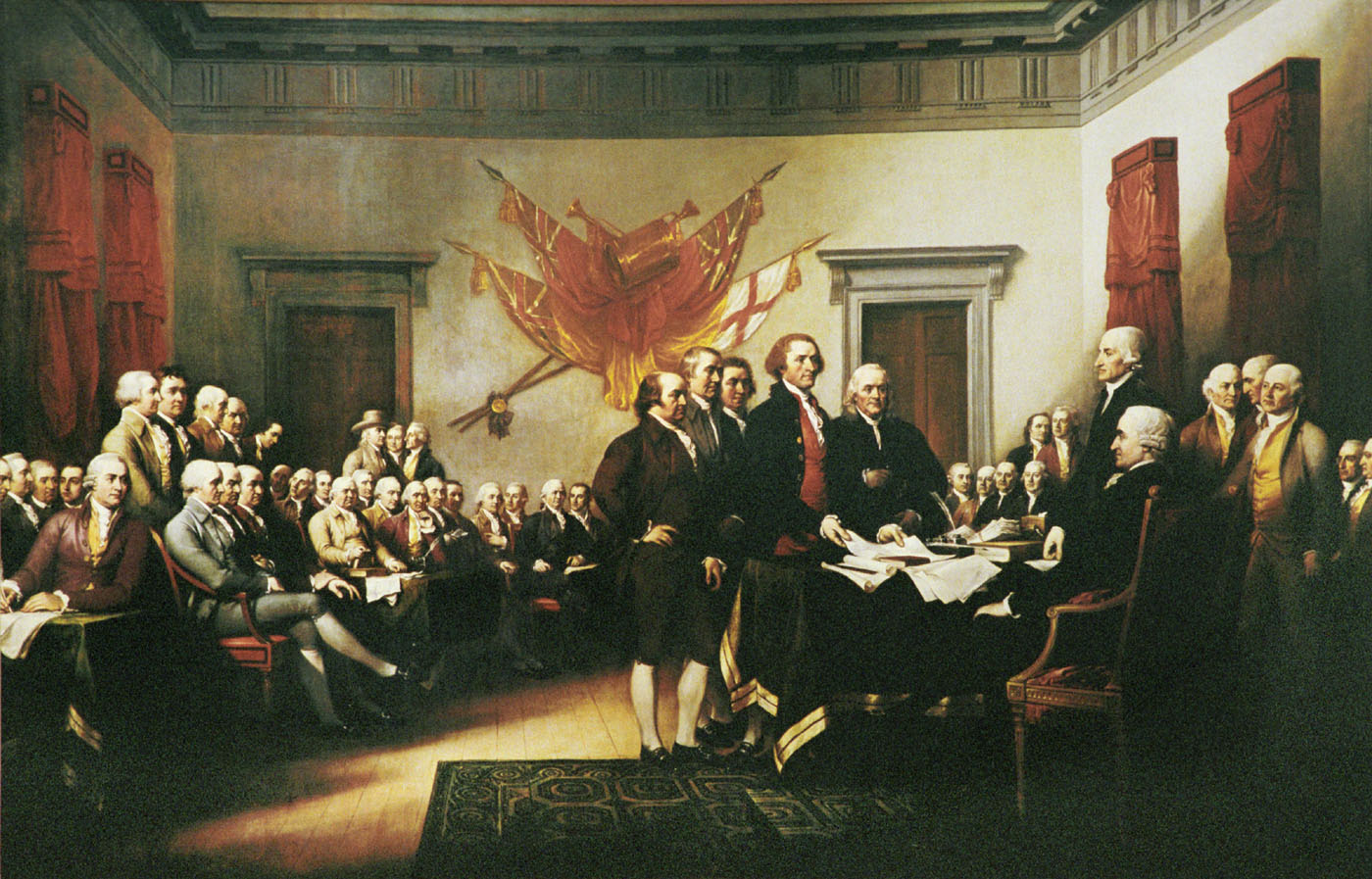
And so all the political theorists and scientists and historians tell us day in and day out in orientation that the government is slow and it was designed that way. It’s supposed to be that way. Our founding fathers created it as such. I disagree.

Our founding fathers designed it not to have to much centralized power or unbalanced power. Yes. That is true. But the concept that their intent was for the government to be slow does not make any sense to me and is not connected at all by documents. Slowness might be a side-effect of a balance of powers but it was not their intent. That’s different.

Moreover many people in DC seem to think that we’re supposed to do things according to how the original fathers wanted it. They wanted a right to bear arms so we should have it. They wanted a very weak federal government that does very little so we should oppose a federal government intervening too much.

I also doubt this. What is it that is supposed to be (or was) the greatest strength of the US Constitution? At that time it was its flexibility. The writers new they didn’t know everything, that it was an experiment and that, quite frankly, there would be bumps along the way. So allowing an amendment process allows you to fix and change the document so that it was both flexible and adaptable and hopefully would stand the test of time. I think that’s what they understood more than anything else, more than supposedly wanting a slow government or everything to be the same.

I’m confident that they would adjust to the times and when more government was needed for problems that states are not able to handle or for problems that are national problems, they would support and allow it with much debate and talk, of course. They were men that knew the document and its meaning must change as the times, the demands, the problems, the obstacles, and the needs changed in time. That’s the founding fathers.

Have you never wondered how amazingly ironic it is that the founding fathers used such perfect, ideal language to originally include themselves and exclude others, but paradoxically allowing, later, for the full interpretation of those words to include everyone? I mean ethnic minorities and women, for instance, fulfill the words they wrote, when they said that


“All men are created equal” [Declaration of Independence]

Tuesday, August 31, 2010

POLITICKING from AMERICA II

I think some people might have been confused. My best friend told me that US involvement in international relations is not that simple. Nothing is black and white. So let me go back over the basics.

This is not a conspiracy theory at all. I’m not talking about any particular type of collusion or conspiring to do anything to take over the world or secure US domination. Now, some of our government documents openly use this language (where in the past I don’t think it would have been so open) so if one does the research, one must come to terms with that. But if there are any people conspiring it is not something that all people are tied into.

Companies have an uncanny ability to make employees fight for its own goals. What I mean is that the goal and the bottom line of a company is to make a profit. Companies then have a great ability to make the employees fight to make a profit. Companies do this by tying incentives of employees to the profit of the company so that every employee from the person who cleans the floors to the CEO is doing what it takes for the company to make a profit. Haven’t you seen this? Haven’t we all been in situations when dealing with an employee of an organization or company and we’re amazed at how emotional the employee gets about the work when in reality it doesn’t really matter at all, in the big scheme of things? Yes, sometimes the passion is due to the fact that the person is passionate about the work, but usually the person has incentive to do well in the job. And doing well usually means enhancing or growing the business of the company. And enhancing the business of the company usually means more profit. It’s quite amazing, actually. So everyone in the company is working to increase profit, like members of an impersonal entity, the movements of a large machine. And it works.


The lone goal of a traditional company is profit and increasing it.

Companies have disproportionate influence over our government. This is not an opinion or biased or conspiracy theory. It’s just true. We have politicians who are elected into office. They need large amounts of money to run for office. The only people that can sway them on how to vote or what to fight for are people who vote for them and people who can give them money so they can campaign for votes. Companies can give money. They hire lobbyists who go to politicians and sway them to do what they want and politicians listen. In fact, a single lobbyist is more powerful than a single citizen. DC people will tell you this is only because lobbyist know the system and how to get what they want, but as it stands, it is true. With increasing mergers of companies in today’s age, there is a decrease in the amount of corporate voices heard. Regardless, the message of a corporation is always the same: help me increase my profits and don’t pass laws that reduce my profits. Corporations have risen to a point of being given the benefits of citizens but don’t have the responsibilities of citizens (the tide is slowly changing as people are trying to hold them to more and more responsibility). The problem is that voting is not required by law. So MANY citizens do not vote. The least participative is the lower class. This is why you never see anyone campaigning for “lower class values” and “the poor” and winning a presidency. No, Clinton (both) campaigned for the middle class which is great but it doesn’t help “the least of these.” A single mother working multiple jobs to take care of multiple kids is unlikely to make it to the poll station to voice her opinion. So it has the affect of diluting the democracy to a point where it isn’t a democracy. The salient feature of a democracy is the multiplicity of voices and choices. But you never really have a choice of a candidate campaigning for the lower class. You never really have a choice of a candidate who is not supported by the top companies in the country. In other words, we tend to lack a multiplicity of voices; every voice is not heard. People are free to choose who they want. But we don’t have choices that represent all peoples. And to top it off, a single lobbyist has more potential and power in a senator’s office than a single citizen, on average. This is not new to anyone in DC. This is how the system works.

The lone goal of a traditional company is profit and increasing it.

Companies have disproportionate influence over our government.

The government therefore works, in many cases, to increase the profits of its companies. This comes from the logical progression. It ranges from subsidies for corn and strengthening of the insurance infrastructure to the favor of US companies for development and relief in war and peace and the opposing of nationalizing of resources of foreign countries.

That’s just math. But there is hope, it is true that Obama might be less beholden to corporate interests since he had the largest campaign with individual donors than I’ve ever seen, but he is still beholden to them as is the Congress with whom he works. But it does indicate that another way is possible. And I look forward to a day, however impossible it may be, when such a campaign is fully and only funded by individual donors.

Politicians used to be quite cordial in earlier times (maybe when I was kid?). In public they were political enemies, but they would share a drink and laugh after the debate was over. They knew and understood how the game works and who funded whom. But these days it seems to have increased in vitriol and personal intensity.
Africa has been ravaged by such economic imperialism. The Middle East was controlled by it. We saw last time how effects of it were felt in Latin America, but there has been a rising tide of “leftist” governments (left from our perspective) and leaders are trying to take resources into the hands of their people, rid themselves of the IMF, and keep their land free of American military bases. This is not in every Latin American country but there is a definitely a noticeable trend. Next time (because this is a little long I’ll talk about trends in Asia.