Showing posts with label Shakespeare. Show all posts

Saturday, January 12, 2013

ITALY


I haven’t seen many Italian movies, though. I decided I would also add a few more observations about Italy given that I visited it for a second time in 2012 because I didn’t get to see everything the first time. This time I went to the northeast and saw towns like Verona and Venice, the Disneyland of canal cities. Verona was funny because there was a house claiming to be Juliet’s house (Romeo and Juliet) and it had the famous balcony from which Juliet called out “Romeo, Romeo, wherefore art thou Romeo?” There is a bronze statue of someone that is supposed to be the fictional Juliet and visitors come far and wide to place one hand on her colour-changing breast (due to the oils in people’s hands) and take a picture in that pose. It’s strange but that’s what they do.

Venice is a bit hard to describe. It really is like people tell you. There is a type of romance there, a stink there (though I didn’t smell it), a beauty there, a mystery there, and a resilience there. There really are gondolas, though they may look slightly different than you imagine. The gondola drivers don’t actually sing, but you can hire a separate opera singer to go on your gondola and sing while you float about in the Venetian canal-ways.


I wanted to share some observations, though, about the country, different from what I shared last time. The first is that there is a lot of city and regional pride in Italy. I mean people in Venice are Venetians, first, and Italians, second. That might be unfair since Venice was an actual republic before whereas other Italian cities were not. But there is definitely a regional pride in specific, regional recipes, foods, discoveries, languages, and dialects. Different cities claim to have the best pasta. “Every” city claim to have the best gelato.

The second observation is that Italy has a type of Eastern European feel. I’m not sure what I mean by that but it is poorer than France, Germany, and England. It seems to have that type of rural communal feel, of families getting together and sharing what they have, of people living their dreams, if only in their hands, but speaking it into imaginative existence. There is drama here in the simple things as if they were fantastical. And an intersection in which four cars meet can become the climax of a movie with people getting out of their cars doing various gestures (it doesn’t occur to any of them to back up). A woman might pass you in the street railing against the government as if she had no power, no voice, no ability to affect the change. It’s dazzling, simple, and strange.

The third observation is that the people there don’t care so much about appearance related to swimwear. Women in North America tend to hate men’s bikinis (often called speedos). I’ve been told this is not a cultural experience; women just don’t like seeing that. When you go to some Asian or European countries it’s quite the opposite: no one cares. It’s just normal. So now I believe it is a cultural thing with North America and the love of board shorts or trunks. If a woman grows up in a culture where men and even boys at a young age wear boys bikinis or speedos, then the woman is more likely not to care and to be used to it instead of grossed out like North American women. It was interesting to see. In Italy, I stuck out for wearing swimming trunks. It also works the other way. In North America, if a really large woman wore a bikini, a friend would tap me on the shoulder and say “No she didn’t!” In Italy, when it’s hot outside, a really large woman puts on a bikini because that’s what you do. No one says “What is she doing?” or “She looks ridiculous.” I guess it’s just normal. And I don’t mean just big women, I also mean big elderly women. I also expected bikinis to be a swimsuit that the young would wear, but I often saw elder women wearing bikinis, too. It seems to be more natural there. And more people seem not to care.

Monday, August 27, 2012

CORRECTIONS & AMENDMENTS


Three questions arose from the last updates—one about Shakespeare, one about the beliefs and actions embedded in the human condition, and one about acculturation. First, some people want to know what my personal opinion is as to the identity of Shakespeare, the playwright. I still have more to read in the authorship debate, and, so far, I see enough problems that I have reasonable doubt. Even if the majority of Shakespeare academicians are correct that William of Stratford is William Shakespeare, there are still some peculiarities to the story and questions that I would love to see answered. However, I try to look at it from a legal perspective in which case the job is not to necessarily prove authorship one way or the other (which may not be possible) but to come to the best determination of authorship. Legally, the difficulty lies in the use of “reasonable doubt” as a litmus test to decide if you can comfortably come to a determination of “guilty,” if you can agree with the plaintiff. This is a problem because a legal case involving the authorship of Shakespeare’s plays would put the onus of proof on the various conspiracy theories or anyone claiming William of Stratford was not the author. In this case, to prove William of Stratford guilty of falsely claiming credit, you would have to prove someone else wrote beyond any reasonable doubt. This is quite hard to do. I might say there is reasonable doubt about the authorship of William of Stratford, but that is different from the difficult task of removing any reasonable doubt that William of Stratford took credit from someone else who wrote it. And a legal case would require that proof beyond a reasonable doubt. And as it stands now, even though there is a plausible fit between the Earl of Oxford’s motivations, education, and opportunity with Shakespeare’s plays, it is hard to prove beyond reasonable doubt regardless if you have doubt about the authorship of William of Stratford.

Now check this out. Last year, there was a Slate article on a U.S. Supreme Court Shakespeare case about a mock trial held in Washington, DC on November 25th, 1987. This court was presided over by three U.S. Supreme Court Justices at the time—John Paul Stevens, Harry Blackmun, and William Brennan. This case, originally described in a New Yorker article the following year in 1988, featured a representative arguing for the generally assumed authorship of William of Stratford and another representative arguing for the authorship of the 17th Earl of Oxford, Edward de Vere. The court decided in favour of William of Stratford, saying there was insufficient evidence to prove the authorship of de Vere (you see where the burden of proof lies). But this is where it gets interesting. According to the Slate article, both Blackmun and Stevens “expressed reservations about the decision,” and in April 2009 Stevens told the Wall Street Journal that he changed his mind, now believing Edward de Vere wrote Shakespeare’s plays. In fact of the justices asked this question in April 2009, there were only two justices—William Kennedy and Stephen Breyer—unreservedly thought William of Stratford is the author. Three other justices refused to comment (Alito, Thomas, and Roberts). Again, the burden of proof is on a challenger, not just to point out questions about the authorship of William of Stratford but to prove beyond reasonable doubt that someone else wrote it. And that hasn’t been done. Regardless, in the end, it doesn’t really matter. We can still enjoy the plays for what they are worth.

The second point came from one of my best of friends, Praj (housemate extraordinaire). Praj challenged me on the section “The Town,” saying that isn’t it possible for someone like Hitler to have both good and bad parts instead of being all bad? What he says is right, of course; people have good parts and bad parts. I was talking about contradictory messages. Does Hitler care about human lives or children? In one context, you might say yes; in another you might say no. Hitler himself would say yes and tried to construct an image of what he wanted the world to see or know (he did the exact same thing at the concentration camp at Theresien in which he invited the world to see what was going on, showing himself as a really great guy). So I was (poorly) pointing to the fact that the truth of us is not in the constructed image of ourselves (which does involve actions in order to construct the image) but in actions outside of the construct.

I was focusing on the tensions between differing words and deeds. Are you the deeds or the words? Instead of being able to believe one thing (I’m a loving human being; look at how I treat children in this magazine article about me or when visitors came to one of the concentration camps) and do another (killing people), I was simply talking about what you do not being separate from what you believe but being the very thing you believe (the truth lying in your actions).

The last response to the last update was related to the section “Learn from Immigrants.” My good friend Sophia, one of the Peace Corps Volunteers that I have learned the most from, is pursuing a PhD in sociology/social anthropology/political ecology/human geography or something like that (very interdisciplinary work she’s doing). She passed on an article to me about the crowning of a new Ashanti chief of New York. It’s a great example of immigrant customs persisting in new environments and countries. What struck me about the story is that I didn’t know any sub-Saharan African chief-based tribes installed chiefs over areas in other countries, like New York. It fascinated me. Like the Ashanti mentioned in the article, my Nigerian state and my Nigerian “county” (collection of villages) also have cultural and fund-raising non-profit organisations in the U.S. But we don’t install chiefs, so it was very interesting to see the extent that some traditions continue and survive and actually aid the survival of a people. And like the Ashanti cultural group, my cultural groups also struggle to pass the baton to the next generation who generally tend to be less interested in such organisations than their parents. Due to a recent trip to Italy, I wondered if Italian immigrants experienced the same things in other parts of the world.

Monday, August 13, 2012

ART


 Like I said, I work for this smaller technology firm in the UK and they treat us really nicely. On the opening weekend of The Dark Knight Rises, the engineering part of the company rented out a theatre for all the engineers. Then because we didn’t fill it out we were able to bring a guest. We were each given a bottle of water and popcorn and I thoroughly enjoyed myself, having waited for this movie for over a year. I want to say that it is good. It has a lot of cool effects and action but a lot of drama. It’s slower than the 2nd movie, The Dark Knight, because the action doesn’t really start until maybe 2/3rds of the way into the film, but it’s quite good. I think I liked it because I like drama and there is a lot of drama, relational struggles, and personal searches.

I will not say that it is better than Batman 2: The Dark Knight. How do you beat that movie where the action starts from the beginning, where it ends and continues at least 3 times, and where Heath Ledger played his role to perfection? It’s hard. The Dark Knight Rises was still a good movie, and I loved the psychological parts the best. My two favourite thinking moments which I’m still trying to apply to my life were about hope and fear. One of the characters in the movie said “Without hope there is no despair.” . . . . Just sit and let that counterintuitive statement hit you. I LOVE IT! And I find it to be true. The second one was not completely worded as it was lived out—fear makes a man stronger (or more able). . . . how does that one hit you? I also find this to be true. I think Christopher Nolan not only did a great job directing, he did an excellent job co-writing it. I encourage you to go see if it you liked the first two.

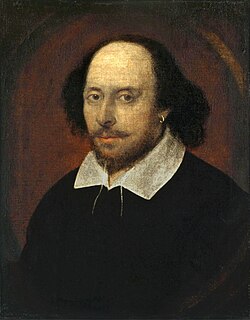
But what really has me thinking is the movie Anonymous which advances one of a number of theories about the “true” identity of the writer, William Shakespeare. This is an old academic (some say nonsensical) debate that has gone on for decades, with the specific conspiracy theory in Anonymous first appearing around 90 years ago, advanced by a man named Thomas Looney.

First, to make sure you understand what I’m writing, I will call the actor from Stratford-upon-Avon who moved to London and became famous for many plays, eventually opening up and co-owning the Globe Theatre William of Stratford. I will call the actual writer (which could be the same person) William Shakespeare. Secondly, I’m always bothered by current media that presents two sides without giving me the proper context of what percentage of experts fall on each side or the fact that there are many more opinions other than the two extremes presented. So let me say that the vast majority of academic Shakespeare experts believe that William of Stratford is William Shakespeare. Thirdly, remember that even though a vast majority of people believe William of Stratford was Shakespeare, there are still academics who doubt it, even if in the minority. So it is not only conspiracy theorists or people who are not Shakespeare experts. Lastly, let me give you a few of the problems the people (in the minority) have preventing them from believing William of Stratford wrote the plays attributed to Shakespeare.

 William of Stratford had little or no education – Some believe that the level of knowledge and sophistication in Shakespeare’s poetry and writings required that he be an aristocrat or at least well-educated. However, the problem with this view is that Ben Jonson and Christopher Marlow (also in the movie) had similar backgrounds. Ben was the son of a bricklayer, I believe, while Marlow was the son of a shoemaker. Ben also had a grammar school education, and many people consider Jonson’s plays and Marlow’s plays even more educated or erudite. The point here is that it is hard to understand, but it is impossible? No one disputes Jonson’s authorship nor Marlow’s authorship. I will, however, say that there is a reason that Shakespeare is considered the greatest of all time.

William of Stratford’s children were illiterate – I think the belief is that someone that well-written and educated (whether self-educated or otherwise) would have educated his children or had his children educated. This however deals with probabilities as opposed to proof.

William of Stratford never left any writing in his own handwriting other than 6 signatures (which differ in spelling) - This one actually bothers me. Of course, I say this from 21st century experience in which I know if I died, people would find many things both typed by me and written by hand by me. I still find it odd that there is no writing in his handwriting. The first folio (first publication) of his work was completed in 1623 by two actors in his company after his death. It sits here in the UK at Oxford University. Again, this is not proof, but raises doubts.

William of Stratford spent a lot of time engaging in law suits  - This one makes me laugh. The problem here is one of time. If you look at any of Shakespeare’s 37 plays, they seem to have taken a long time to write. Where did William of Stratford get the time to write such plays when he had a wife and children and was spending time and effort engaging in law suits? Again it makes me laugh, and seems like a logical question. Interestingly enough, you can see legal experience in Shakespeare’s plays like the Merchant of Venice.

William of Stratford couldn’t read French, Spanish, or Italian – Shakespeare’s plays show a knowledge of these languages (including references) or at least access to translated versions. But there seems to be no evidence that William of Stratford could read any of the languages or had access to translations. The problem here, again, is that though it’s hard to believe, we just don’t know if he actually did have access to a privately circulating translation or if there was a translation that is no longer with us today (this has happened with other texts that we know about).

William of Stratford never traveled outside of London (after moving there) – We have no record of him traveling outside of London but he could have done so unknown to us today.
William of Stratford left no books, letters, or correspondences in hi will and did not get even one eulogy at his death – This is another of those strange things. If I were William, again from my limited 21st century perspective, I would have books and letters and correspondences that I owned. I would at the least have books that I owned if I loved to write so (and possibly read and borrow and create history plays). And many find it strange that he died somewhat unnoticed. To be honest, I don’t really get it myself.

I read one analysis that said to name one, just one other writer who was illiterate, brought up illiterate children, financed his work from the pockets of common people, has a name that is a pun, has a name that states a sentence in English, died unnoticed, and never commented on the events of his day. The last point is another reason people think someone else (the Earl of Oxford) was the writer because they felt the Earl of Oxford had a reason, being aristocracy, not to directly comment on other aristocracy and the events of his day.

However as much sense as it seems to make that William of Stratford and Shakespeare were two different people, it’s hard to find proof of it. In support of William of Stratford, I find it strange that I have read nothing from the time of the Shakespeare including immediately after his death that proposes hypotheses of alternative writers. This is all more recent history. Some believe this is because it was a great cover-up or conspiracy to hide it. If so, it was very well done. If you want to convince the academic establishment (including people who have spent their lives studying this) you have to find some actual direct proof to link Shakespeare’s plays to someone else instead of starting with the holes or problems with the authorship belonging to William of Stratford. Still it’s a tantalizing mystery. In reality, though, it doesn’t really matter who wrote it. I’m just thankful we have the plays and can enjoy them for what they are worth (or not worth if you don’t like Shakespeare).

I went to the Tate Modern museum recently and saw an exhibition by Sung Hwan Kim in the Tanks section of the Tate. I went there with James, a college friend and DC male a capella group-member. We were going to support the work since another college associate did the music for Sung’s exhibition. I must tell you that I was so disturbed by that exhibition. It literally unsettled me like watching a suspense or horror film. I kept thinking why. Sung is an interdisciplinary artist, so he uses narration, video, images, music, sound, sculpture, and more. And I thought to myself, that sound and music was a huge reason why it reached me more than it would have without it. That seems obvious, but I wonder if all art is not equal to me.

It seems much harder for a visual art piece to reach out and grab me the way a piece of music has the potential to do with no visual aid. Yet, if the art piece is combined with music it regains that potential. I’m not sure if I’m imagining this but it seems that way. I can look at art pieces (I spent a lot of time in Italy in museums) and be moved but it seems much rarer that a piece really moves me or shakes me than a piece of music moves or shakes or shapes me. I wonder if I am more susceptible to mood creation through my auditory cortex rather than my visual cortex. I don’t know. Does anyone else experience this? Let me know. Until next time, ciao.