Three questions arose from the last updates—one about Shakespeare, one about
the beliefs and
actions embedded in the human condition, and one about acculturation.
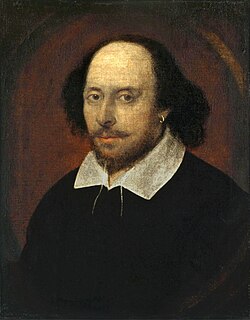
First, some people want to know what my personal opinion is as to the identity
of Shakespeare, the playwright. I still have more to read in the authorship
debate, and, so far, I see enough problems that I have reasonable doubt. Even
if the majority of Shakespeare academicians are correct that William of
Stratford is William Shakespeare, there are still some peculiarities to the
story and questions that I would love to see answered. However, I try to look
at it from a legal perspective in which case the job is not to necessarily
prove authorship one way or the other (which may not be possible) but to come
to the best determination of authorship. Legally, the difficulty lies in the
use of “reasonable doubt” as a litmus test to decide if you can comfortably
come to a determination of “guilty,” if you can agree with the plaintiff. This
is a problem because a legal case involving the authorship of Shakespeare’s
plays would put the onus of proof on the various conspiracy theories or anyone
claiming William of Stratford was not the author. In this case, to prove
William of Stratford guilty of falsely claiming credit, you would have to prove
someone else wrote beyond any reasonable doubt. This is quite hard to do. I
might say there is reasonable doubt about the authorship of William of
Stratford, but that is different from the difficult task of removing any
reasonable doubt that William of Stratford took credit from someone else who
wrote it. And a legal case would require that proof beyond a reasonable doubt.
And as it stands now, even though there is a plausible fit between the Earl of
Oxford’s motivations, education, and opportunity with Shakespeare’s plays, it
is hard to prove beyond reasonable doubt regardless if you have doubt about the
authorship of William of Stratford.
Now check this out. Last year, there was a Slate
article on a U.S. Supreme Court Shakespeare case about a mock trial held in
Washington, DC on November 25th, 1987. This court was presided over
by three U.S. Supreme Court Justices at the time—John Paul Stevens, Harry
Blackmun, and William Brennan. This case, originally described in a New
Yorker article the following year in 1988, featured a representative
arguing for the generally assumed authorship of William of Stratford and
another representative arguing for the authorship of the 17th Earl
of Oxford, Edward de Vere. The court decided in favour of William of Stratford,
saying there was insufficient evidence to prove the authorship of de Vere (you
see where the burden of proof lies). But this is where it gets interesting.
According to the Slate article, both Blackmun and Stevens “expressed
reservations about the decision,” and in April 2009 Stevens told the
Wall Street Journal that he changed his mind, now believing Edward de Vere
wrote Shakespeare’s plays. In fact of the justices asked this question in April
2009, there were only two justices—William Kennedy and Stephen
Breyer—unreservedly thought William of Stratford is the author. Three other
justices refused to comment (Alito, Thomas, and Roberts). Again, the burden of
proof is on a challenger, not just to point out questions about the authorship
of William of Stratford but to prove beyond reasonable doubt that someone else
wrote it. And that hasn’t been done. Regardless, in the end, it doesn’t really
matter. We can
still enjoy the plays for what they are worth.
The second point came from one of my
best of friends, Praj (housemate extraordinaire). Praj challenged me on the
section “The Town,” saying
that isn’t it possible for someone like Hitler to have both good and bad parts
instead of being all bad? What he says is right, of
course; people have good parts and bad parts. I was talking about contradictory
messages. Does Hitler care about human lives or children? In one context, you
might say yes; in another you might say no. Hitler himself would say yes and
tried to construct an image of what he wanted the world to see or know (he did
the exact same thing at the concentration camp at Theresien in which he invited the world to see
what was going on, showing himself as a really great guy). So I was (poorly)
pointing to the fact that the truth of us is not in the constructed image of
ourselves (which does involve actions in order to construct the image) but in
actions outside of the construct.
I was focusing on the
tensions between differing words and deeds. Are you the deeds or the words?
Instead of being able to believe one thing (I’m a loving human being; look at
how I treat children in this magazine article about me or when visitors came to
one of the concentration camps) and do another (killing people), I was simply
talking about what you do not being separate from what you believe but being
the very thing you believe (the truth lying in your actions).
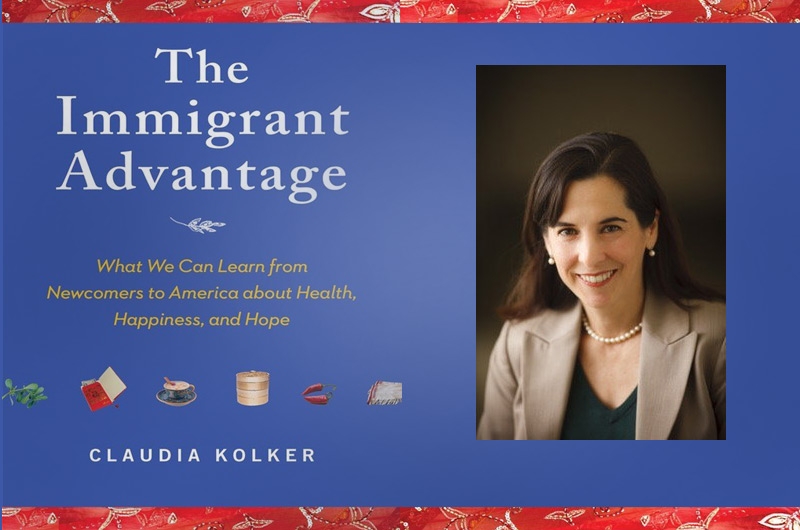
The last response to the last update was related to the
section “Learn
from Immigrants.” My good friend Sophia, one of the Peace Corps Volunteers
that I have learned the most from, is pursuing a PhD in sociology/social
anthropology/political ecology/human geography or something like that (very
interdisciplinary work she’s doing). She passed on an article to me about the crowning
of a new Ashanti chief of New York. It’s a great example of immigrant
customs persisting in new environments and countries. What struck me about the
story is that I didn’t know any sub-Saharan African chief-based tribes
installed chiefs over areas in other countries, like New York. It fascinated
me. Like the Ashanti mentioned in the article, my Nigerian state and my
Nigerian “county” (collection of villages) also have cultural and fund-raising
non-profit organisations in the U.S. But we don’t install chiefs, so it was
very interesting to see the extent that some traditions continue and survive
and actually aid the survival of a people. And like the Ashanti cultural group,
my cultural groups also struggle to pass the baton to the next generation who
generally tend to be less interested in such organisations than their parents.
Due to a recent trip to Italy, I wondered if Italian immigrants experienced the
same things in other parts of the world.


