Showing posts with label sacredness. Show all posts

Sunday, February 12, 2012

DC SOCIAL ENTREPRENEURSHIP

Some of you know I was reluctant to leave DC. This was due to the fact that I was helping to launch 3 initiatives with my partner Andy. I wanted to describe a bit of the three initiatives because I am now looking for someone to hire to carry them on.

First, within faith communities I became tired of the false dichotomy between secular and sacred. One manifestation of that is that many churches will spot out someone they think has “talent” or “spiritual” talent and ask them to help serve in a ministry. If they think the person is doing well, they ask them to help lead a ministry or program. If they think they are really impacting, they then invite them on staff because implicitly they are saying that’s where the impact is. But there is no understanding or recognition of the fact that if someone is good or doing good work, maybe they should continue working outside the church. This is exemplified in the fact that churches often expend financial resources and human resources (releasing part of their congregation) to go and plant another church elsewhere, a church that will be led by someone that is identified as a rising star or an impactful person within the parent church. At Redeemer Church in New York City, a group of church goers complained to Pastor Tim Keller and said it’s not fair how church members get all that money and are supported financial for a year or so to do a church plant, but if a church member wants to open a restaurant that employs ex-cons or start an orphanage or establish an urban garden they receive no funds. I don’t credit Pastor Keller and his staff for coming up with the idea, but I do credit them with being amenable to the suggestion and creating the Faith and Work Center. Part of the Faith and Work Center is an Entrepreneurship Initiative that holds a competition to award a grant to one for-profit, one non-profit, and one arts venture being started by a church member.


Andy and I wanted to do something similar in our church community. Imagine it. We had a sermon series called “All In” about being totally committed to the cause. Can you believe that other that 2 examples, every other example used throughout the sermon series was an example of a church clergy member or a missionary? And the two non-clergy examples were extremely wealthy people. The implicit message is that if you are going to be all-in, you need to work for the church or be rich. What we need are churches that have an understanding of the Divine everywhere in the every-day alongside every person. We need churches that see the sacred in extra-church work not just church work or parachurch work. We need to break the sacred-secular divide.

So we started two things. We started a quarterly event in which we came together to discuss such issues. Our first was in September 2011. We had a church member discuss this very issue as it is the topic of a book she is writing. She talked about the examples in the “All-In” series, and she spoke about growing up in church and only being taught how to be a good Christian wife or a good Christian mother. She was neither of those and often questioned “Does my faith have no relevance to my situation as a single businesswoman in the work place or to my job?” It was a good event. And we broke u pinto small groups based on different sectors—military government, non-military government, arts, non-profit, for-profit, other. We plan to do one every quarter, break into small groups, and those groups continue throughout the quarter inviting people to meet to talk about the work they do in the world and the relevance their faith has on such work. (I was not worried about this continuing without me. I knew, if I took the London job, it would be fine and continue.)

Second, we realised there was a need for seed funding for social entrepreneurs in our community. This need felt especially poignant when we considered all the people who took part in our second SPARKS series (hope you followed that series in the updates). We had 100 people in our group, and 30 regulars at the meeting; all were asking “What Next?” They felt empowered to challenge themselves weekly to take new positive timely risks, but what seemed most natural was to come together to do a communal risk for the community and city. So Andy and I began plans to create a community of people who came together and pooled their resources to solve problems local and endemic to D.C.

A good example of this is Plywood People. Plywood People is run by a friend named Jeff, an Atlanta social entrepreneur. Jeff doesn’t convene people in the same way we want to do; he convenes people who are already social entrepreneurs or who are working on ideas to talk and share and network and meet. But let me give you an example of the power of this and what Jeff has done. Jeff and his group were trying to figure out what to do about the refugee situation in the States and in their community. It was hard for refugees to find a viable livelihood and provide for their families. During that time, he was driving and noticed the billboards along the roads. He wondered what they did with billboard paper when the ad was over. He called and asked. They said they threw it away. He asked if he could have it to reuse. They told him yes. Since most billboards are owned by a few companies it wasn’t hard to get the billboard paper from other billboards. Jeff started an organization, subsequently, that employees refugee women to make bags from recycled paper. When Andy and I visited Jeff and his organization in August 2011, they had 10 women working for Billboard Bags and 2 women had already transitioned from Billboard bags to other jobs. Plywood people intends to be an incubating group that continues to launch further initiatives like Gift Card Giver.


So Andy and I set out to do the same thing, but the end of my fellowship and a London offer seemed to be complicating things. So I have been looking for someone to work for me and with Andy in DC to carry on the work. Because this was in the initial stages when I left, it has stalled somewhat, and I would love for someone to continue the work.

Third, and most importantly, Andy and I decided to start our own social enterprise/entrepreneurship incubator. We wanted to start something in between Redeemer Church’s Faith and Work Center’s Entrepreneurship Initiative (that hold an annual competition to give a small grant to one arts, one non-profit, and one for-profit venture from among church members) and the Awesome Project (that gets 10 investors to give $100/month for 1 year in order to offer monthly $1,000 cash prizes to the best idea that month to use the money). Instead of monthly prizes or yearly prizes we would do quarterly prizes. We would also have investors, some who give $100/month for 1 year, some who give more like $200/month. And we asked our church to be a much larger investor in the program (on the order of thousands per month). With this money we plan to offer prize ever quarter and to work on business plans with the finalist and provide mentoring.

The incubator had a second part. We also plan to open up a for-profit business, a shared workspace. If you were running start-up and preferred not to work from home or a coffeehouse, you could rent shared workspace from us for any number of hours a day and any number of days a week. You might also come to us if you had a small company (for instance 2 employees) and it was cheaper to rent shared workspace from us than to rent permanent office space. Social entrepreneurs would benefit from networking with other social entrepreneurs who used the space and they could speak with Andy and me for mentoring help. We would also offer workshops both to renters and outside people on topics such as “starting a business,” “creating a business plan,” “forming a board,” “creating a social pitch,” “finding seed funding,” etc.

This was in the initial stages though Andy and I had found a potential location. The initial location didn’t work (physically it was not the right size), so we were on the hunt for a better space, and then I had an offer and left to London. So I’m currently looking for someone to carry on this oh so important work in DC for me.

Additionally, I hired an intern this past summer 2011, one of my former students, to help do preparatory work in restarting the programme that sends high school kids abroad to do international summer service work for 1-2 months. We were restating it as its own stand-alone organisation. Both Houston schools and one D.C. school pulled out of the program and didn’t end up going on the trip for the summer of 2011, so my intern was helping to prep work for schools to go in the summer of 2012. We now have one school signed up to go but they will go in the summer of 2013. Many thanks to Audrey McKim who is doing hard work on the ground in Houston while I’m off doing other projects. If you would like to help or to take over any of the above 3 projects or this international summer service programme, please let me know. Thanks!

Sunday, August 28, 2011

UPDATE - April 29, 2011

QUIZ!!!

1. I was born September 14, 1849 and died February 27, 1936. I was a Russian physiologist primarily interested in physiology and natural sciences. Through my study of the digestive function of dogs, I discovered the conditioning reflex. Who am I?
A) Ivan Pavlov
B) B. F. Skinner
C) John Watson
D) Edward Tolman

2. I initially wanted to be a writer, but eventually became a psychologist and one of the leaders of the behaviorist movement. I rejected the concept of free will, instead suggesting that all behaviors are conditioned. Who am I?
A) B. F. Skinner
B) John Watson
C) Ivan Pavlov
D) Edward Tolman

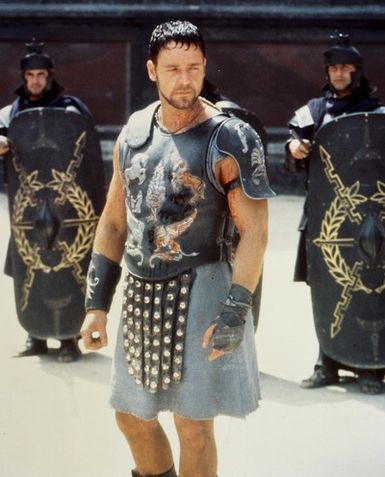
3. This former Roman slave escaped from a school for gladiators, then started a revolt with 90,000 soldiers under his command. He had an effective run, but eventually Crassus and Pompey wiped his forces out and killed him. He's better known because he was the subject of a 1960 film by Stanley Kubrick. Who was this leader of the revolt?
A) Cicero
B) Marcus Antony
C) Pontius Pilate
D) Spartacus


4. This man was the lead defendant in the case of United States v. Libellants and Claimants of the Schooner Amistad in 1841. In the 1997 Stephen Spielberg movie "Amistad", he was played by Beninese actor Djimon Hounsou. Who was this African illegally sold into slavery?
A) Dincã
B) Cinqué
C) Dred Scott
D) Malinche

5. This man was captured by Algerian pirates in 1575 and spent five years as the property of the viceroy of Algiers. Later ransomed, he went home to Spain and began working on his writing, eventually giving the world one of its novel-length masterpieces, "Don Quixote". Who was this author and former slave?
A) William Shakespeare
B) Miguel de Cervantes
C) Gabriel Garcia Marquez
D) Chinua Achebe

6. I was the youngest of six children and was very close to my father, a rather well-known psychologist. While I never earned a higher degree, I made numerous contributions to psychology and psychoanalysis, including creating the field of child psychoanalysis and describing the ego's defense mechanisms. Who am I?
A) Anna Freud
B) Melanie Klein
C) Sandra Bem
D) Mary Whiton Calkins

7. My interest in identity began early in life. At temple school, I was teased for being tall, blond, and blue-eyed, while my grammar school classmates rejected me for my Jewish background. I later learned that my biological father had abandoned our family and that the man I thought was my father was actually my stepfather. I spent some time wandering around Europe before becoming interested in psychoanalysis. My contributions to psychology include a theory of psychosocial development and my concept of the identity crisis. Who am I?
A) Albert Bandura
B) Abraham Maslow
C) Carl Rogers
D) Erik Erikson

8. This woman was owned by Thomas Jefferson, and bore him six children, four of whom survived to adulthood (though there is some controversy about the DNA evidence). What was her name?
A) Sally Hemings
B) Hagar
C) Harriet Tubman
D) Margaret Garner

9. This man was the slave of Iadmon of Samos. Later released, he mingled with the rich and famous of ancient Greece (even living in the court of Croesus). Today he is known for his stories of animals, each of which gives a moral meant to teach men. Who was this creator of fables?
A) Agamemnon
B) Thucydides
C) Aesop
D) Homer

10. This former slave, freed by the American Civil War, became an educator. He was the first leader of the Tuskegee Institute, and stayed in that position until he died in 1915. Who was this author of "Up From Slavery"?
A) Samuel C. Armstrong
B) W. E. B. Du Bois
C) Booker T. Washington
D) Henry Huttleston Rogers

11. BONUS - I failed in business in ’31.
I ran as a state legislator and lost in ’32.
I tried business again in ’33 and failed again.
My sweetheart died in ’35.
I had a nervous breakdown the next year in ’36.
I ran for state elector in ’40 after my health improved.
I was defeated for Congress in ’43, defeated again for Congress in ’48, defeated when I ran for the Senate in ’55, and defeated for the vice presidency of the US in ’56.
I ran for Senate again in ’58 and lost.
I decided to try, again. I ran for the presidency of the United States and won.

UPDATE


Last weekend was pretty crazy. It was Holy week last week. My a capella group was asked to sing for a Maundy Thursday event (we didn’t). I Joined a liturgical pray group for a Good Friday morning reflection. I took the day off, and then went to Good Friday service at night. Saturday we held an Eggstravaganza in the park near my home. I hung out with a good friend, Bianca, in the afternoon, caught up with Min on her birthday, and then attended a Holy Saturday Night Vigil at a Greek Orthodox church from 12 – 2 AM. Then I woke up to serve at 3 Easter Sunday services after which I went to a Greek Easter Brunch and played some Greek Easter games. Whew!

My church sends people out on international mission trips each year and really wants to see everyone go on one. We have a team going to Greece in a month so they wanted to attend the Greek Orthodox service and have the Greek meal. It was an interesting experience. One of my favorite writers is like me in that he’s experienced many different denominations of Christianity, and we both take the best of each one. I like the reverence and awe I find in Catholic/Episcopal/Anglican churches. I learn about an excitement and zeal for God from Protestants. The Orthodox traditions, along with awe and veneration, remind me of the mystery of God. Those are simple examples as I could talk even more about specific sects which teach me about service, emphasize the Holy Spirit, envelope mysticism, or promote hope more than others. You get the point.

All in all, it was a great Lent season for me. Lent, if you don’t know, is the period after Mardi Gras starting from Ash Wednesday and going to Palm Sunday (though some might say Easter Sunday). I’m usually one who reflects at night. But one thing I’ve been doing is slowing down the pace of life in general which affects how and when I eat, how much I seek to find out the time, how attached I am to the internet and the phone, and how much I engage with nature. So I start each day with some stillness, quiet, meditation, reading, contemplations, study, journaling, prayer, reflection, etc. I’ve found that, for me, it affects me better if my day starts that way than if it ends that way (and hopefully it can do both). I have a wonderful job that allows me to slow down like that and not have to wake up super early. I take walks each day beyond the walking I do throughout the city. And I usually do it alone because a lot of people here walk too fast. It’s been quite nice slowing down. And it’s in slowing down that I’m able to see and hear. It was then that I knew what I must do with the professor who was harassing me.

Another things I’ve learned in the slower pace is to see sacredness in all things and in all acts. So instead of just practicing my faith, I’m learning to faith my practices. I used to see email as a challenge or an obstacle keeping me from having an empty inbox at the end of each day. So I would hurry to answer an email forgetting that the main reason I love email so much is that it lets me communicate with people far away with whom I otherwise wouldn’t communicate. So now I’ve gone back to being completely ok with a large inbox and cherishing each actual email replay as a point of contact, a chance at relationship, and an extension of community. Back to the basics.

Holy is the dish and drain
The soap and sink, and the cup and plate
And the warm wool socks, and the cold white tile
Showerheads and good dry towels
And frying eggs sound like psalms
With hits of salt measured in my palm
It’s all a part of a sacrament
As holy as a day is spent

Holy is the busy street
And cats that boom with passion’s beat
And the checkout girl, counting change
And the hands that shook my hands today
And hymns of geese fly overhead
And spread their wings like their parents did
Blessed be the dog, that runs in her sleep

To chase some wild and elusive thing
Holy is the familiar room
And quiet moments in the afternoon
And folding sheets like folding hands
To pray as only laundry can
I’m letting go of all my fear
Like autumn leaves made of earth and air
For the summer came and the summer went
As holy as a day is spent

Holy is the place I stand
To give whatever small good I can
And the empty page, and the open book
Redemption everywhere I look
Unknowingly we slow our pace
In the shade of unexpected grace
And with grateful smiles and sad lament
As holy as a day is spent

And morning light sings “providence”
As holy as a day is spent


--Carrie Newcomer