Showing posts with label orthodox heretic. Show all posts

Sunday, August 28, 2011

The Third Mile

by Peter Rollins

One day a small group of disciples who had embraced the way of Jesus early in his ministry heard him preaching by the side of a dusty road. As they crowded round they heard Jesus say, “The law requires that you carry a pack for one mile, but I say carry it freely for two.”

The disciples were deeply impressed by these words, for at that time a Roman solider had the legal right to demand that a citizen carry his pack for a mile as a service to the Empire. This teaching not only allowed the disciples to turn this oppressive law into an opportunity to demonstrate “kingdom” values, but also presented them with an opportunity to suffer in some small way for their faith.

As it was common for soldiers to evoke this law, the small band of believers soon developed a reputation for their actions. Roman soldiers would often hope that the citizens they asked to carry their packs would be among these disciples, and often a small bond of friendship would develop between a soldier and these followers of the Way.

After a year had passed this custom had become so established in the group that it became a defining characteristic of their shared life. The leaders would frequently refer to the teaching of Jesus and emphasize the need to carry a pack of the Roman soldier for two miles as a sign of one’s faith and commitment to God.
It so happened that Jesus heard about this community’s work, and, on his way to Jerusalem, took time to visit them. The leaders eagerly gathered all the members of the group to hear what Jesus would say. Once everyone had gathered, Jesus addressed them:

“Dear brothers and sisters, you are faithful and honest, but I have come to you with a second message, for you failed to understand the first. Your law says that you must carry a pack for two miles. My law says ‘carry it for three.’”

This story brings up the question of Biblical interpretation (there are many ways to look at this story). So to treat the Bible as a type of religious textbook that provides a sort of ethical framework telling us how to live in each and every situation requires that we approach it in a certain way. Usually this means we must mine the pages and try to discover the answers to specific questions in life or to specific situational uncertainties. Once you find the answers, one then can choose to act according to the textbook or blueprint or to violate it. At the same time, one can ask if the Bible can be read this way without doing Jesus’s teachings a disservice. So was Jesus advocating an approach like that where we open up scriptures for a concrete set of religious conduct or was he promoting a radically different Way of life?

What if it is the latter? What if he is offering a life of love that transcends religious codes of conduct? A religious code seeks to provide a way to work out or figure out what can be done in each situation. Contrastingly, love is never satisfied or constrained. Love doesn’t sit back but always does more than what is asked of love. Imagine a law that says to give 10% to the poor. The person who loves those who are poor will always give more than the required amount. Instead of waiting what out to be done or how much out to be given, the lover doesn’t wait but always gives in excess. The lover’s love exceeds the law and acts in the absence (very important as religious codes of conduct including the Bible, if interpreted as such, never address every situation we face today) of the law. Love fulfills the law by going above and beyond it.

So the story imagines what Jesus might say to the community that took Jesus’s words literally and enacted a religious law in order to follow it. By the instantiation of the law in order to follow Jesus’s words actually undermines the radical nature of it by missing the spirit of the words. The literal following failed to take the words seriously enough. Now we should still admire the ardor and passionate intent of this faithful band of brothers and eschew maligning them. But the example points to the real danger inherent in a literal rendering (at least for these words) and absorbing his living beyond the law back into the law.

So love goes further, beyond duty. The ethical question asks “What must I do?” The love response is “I will do more.” When the ethical guidance or compass doesn’t provide clear direction (and it by nature will have many of those times) love sets out anyway with clear direction, providing a way when there is no way. This is the love Jesus lived, a love that pushes harder and further than any law, a love that is more demanding than any rule or creed. This love experienced in a revolutionary life is faithful to the law by exceeding it.

Sunday, February 6, 2011

ATHEISM


The Agnostic Who Became An Atheist

by Peter Rollins

There was once a world-renowned philosopher who, from an early age, set himself the task of proving once and for all the nonexistence of God. Of course, such a task was immense, for the various arguments for and against the existence of God had done battle over the ages without either being able to claim victory.

He was, however, a genius without equal, and he possessed a singular vision that drove him to work each day and long into every night in order to understand the intricacies of every debate, every discussion, and ever significant work on the subject.

The philosopher’s project began to earn him respect among his fellow professors when, as a young man, he published the first volume of what would turn out to be a finely honed, painstakingly researched, encyclopedic masterpiece on the subject of God. The first volume of this work argued persuasively that the various ideas of God that had been expressed throughout antiquity were philosophically incoherent and logically flawed. As each new volume appeared, he offered, time and again, devastating critiques of the theological ideas that had been propagated through different periods of history. In his early forties, he completed the last volume, which brought him up to the present day.

However the completion of this work did not satisfy him. He still had not found a convincing argument that would demonstrate once and for all the nonexistence of God. For all he had shown was that all the notions of God up to that time had been problematic.

So he spent another sixteen years researching arguments and interrogating them with a highly nuanced, logical analysis. But by now he was in his late fifties and had slowly begun to despair of ever completing his life project.

Then, late one evening while he was locked away in his study, bent wearily over his old oak desk, surrounded by a vast sea of books, he felt a deep stillness descend upon the room. As he sat there motionless, everything around him seemed to radiate an inexpressible light and warmth. Then, Deep in his heart he heard the voice of God address him:

“Dear friend, the task you have set yourself is a futile one. I have watched all these years as you poured your being into this endless task. Yet, you fail to understand that your project can be brought to completion only with my help. Your dedication and single-mindedness have not gone unnoticed, and they have won my respect. As a result, I will tell you a sacred secret meant only for a few. . . .Dear friend, I do not exist.”

Then, all of a sudden, everything appeared as it was before, and the philosopher was left sitting at his desk with a deep smile breaking across his face. He put his pen away and left his study, never to return. Instead, in gratitude to God for helping him complete his lifelong project, he dedicated his remaining years to serving the poor.


Think of it like this. When someone says “I believe in God,” the next question or a good question to ask is “Which god do you believe in?” As Rollins would say and as we all know, theism refers to a belief in God and atheism is a rejection of this belief. But just as you can ask the theist “What God do you believe in?” you can also ask the atheist “What God do you not believe in?” This is because traditional atheism is specific; it is limited to attacks of specific notions and conceptions of God.

Therefore one form of atheism may attack a specific understanding of God but have nothing to say about another concept of God. Traditional atheism, in such concrete forms, isn’t just limited because there are so many varied concepts of God, today, but also because there are an infinite number of possible conceptions of God yet to be dreamed.

The philosopher in this short story sets out, then, to achieve an infinitely large task--to establish once and for all the non-existence of God. But to do this he must reject every known and possible concept of God. It is not until God steps in, that the philosopher is able to achieve a true universal atheism, one that can reject every possible description of God . . .in advance. Why? God transcends every possible concept and cannot be approached as an object or a thing at all.

But who is the one who points this out? It is God who says God doesn’t exist. This type of universal atheism runs strongly through the Judeo-Christian tradition (whether or not you have seen it in the mainstream forms, on TV, and other visible forms) especially in Biblical form. Approaching God as an object that can be grasped and known runs contrary to the Biblical God (or the growing understanding of God found through the arc of the Bible). This is because that God is above all names, above all labels, above all concepts. He is “received but never conceived.” Instead of understanding God like an object, a possible analogy is found in light. Light is not what we “see” directly in some sense. Light is what enables us to see transforming our experience allowing us the experience of sight. God is similar; God is not directly experienced (yikes people might get upset with me) but the name we give to the transformation of experience, to a whole new way of experience. You don’t experience birth; rather, birth opens you up to a whole new world of experiences. That is how God is.


So what my atheist friends and I were never told is that every description of God falls short, even descriptions we find in good books. With every description falling so inadequately short of God, we are led to a universal atheism. We only do justice to the reality of God by laying claim to the fact that no concept of God does justice.

Therefore religious believers can affirm a radical form of atheism in a true sense while still holding on to the reality of God. Are we questioning the importance of good forms of theism? No, rather we are saying that we never let these incomplete, provisional concepts of God stand as absolute authority (we often do this with incomplete expressions of God in the Bible, even if good expressions). A true understanding of the reality of God welcomes the rejection of incomplete descriptions of God and continues searching for less partial, less incomplete descriptions of God, never giving these newer, better incomplete descriptions of God final or absolute authority. You see this through the Bible and Torah as people’s understanding of God is improved and torn down and recreated through the Bible as we move closer to the person of Christ two thousand years ago.

So in the last answer to my “What do I want” questions, when my friend pitted atheism against theism, I want make sure that we understand that a universal atheism runs strongly in the Judeo-Christian tradition. We’re not just a tradition of priests (people serving under God) but prophets (people who speak out against God). You see this in Jeremiah, Amos, even Jesus, himself. . .

My good friend says she’s an atheist, and I think that means we have a lot in common especially if she’s rejecting the visible forms of religion she sees in the world today. I’m constantly in the minority in D.C. in my sub-circles when my policy and science policy friends find out I’m a Christian. The people they make fun of are often conservatives, people who depreciate science, and Christians--Christians who protest at funerals of victims of homosexual hate crimes, Christians who fight against the teaching of evolution in school, Christians who blame the people of Haiti for the earthquake that befell them (because God is mad), Christians who value life when it deals to abortion but do not fight for life as strongly when it relates to poverty or the global burden of disease or the application of the death penalty. Trust me, some Christians are atheist, too. There is more to say about atheism and what it means within the Judeo-Christian tradition, but perhaps I can talk more about it if you ask me to in a future update.

What I’m reminded of is the decline of the Christian church in North America. I’ll spare you the statistics, but it’s been noticed by priests, lay-people, youth pastors, even missionaries. In fact, I almost expect people who grew up in the church to leave it when the go off to college (university) or later. I expect people who grew up without God to stay as far away from him as possible. I’m often surprised at people like myself who grew up with God and yet, somehow, stayed with God. Why? Because both non-Christians and Christians have become increasingly disturbed by what they have seen embraced by prominent mainstream visible Christianity in North America--wars of choice, being anti-big government as if big is bad but being ok with big military and big business, embrace of growth over environmental conservation and preservation, focus on criminalization of abortion (without working on issues that decrease the need for abortion) but not working to fight for life in issues of the death penalty or poverty or disease especially when it disproportionately targets the poor, etc.

Brian McLaren talks about a great awakening, he calls it a new revolution in Christian understanding, thought, and action that is occurring today. I don’t think it’s as monumental as he describes; when I go to the book store the Christian books still mostly comprise books by authors who are not in this emerging understanding of God. Still, McLaren is right. It’s growing, almost like a mustard plant. There are many names of people and churches and groups around the world who are trying to search for something new, embrace something bigger than the concepts we’ve formerly understood and mystically dance with the divine in a new way. There are more authors and more people coming out to say “I’ve always had these questions” or “I’ve always thought that, but I could never find anyone to talk to or with whom to discuss.”

Brian has a new book called “A New Kind of Christianity.” I like this book because Christianity (what does that mean exactly?) is less about doctrines than it is about questions to me. So when I find a group of people or a faith community that embrace people and allow them to ask questions, even questions that remain unanswered still, I’m excited. I’m energized. I need questions. I need to continually strip down and reclothe myself in better understanding. I’m thankful to those around me who have helped me to do that, who allow me to be angry with God, and who show me that God is bigger than my questions and is not offended by them even though religious people around me are (I’m one of them).

Here are the 10 questions

1. What is the overarching story line of the Bible?
The usual answer to this involves the story that man of us Christians were taught to recount when talking to a non-Christian about Christianity. It involves Adam and Eve and the Fall. Over the years there have been minor tweaks here and there to this narrative but nothing major. But there have been parts of it that have been hard to understand and explain (for many this is ok because they want to worship a God they don’t understand). McLaren talks a bit about how some of the difficult concepts might be from men than directly the Bible or even the understanding of Jesus.

2. How should the Bible be understood?
This deals with the question of how the Bible is viewed. Is it a constitution providing an unquestioning legal framework of how to live. Is it a guidebook telling how we live our lives? I had a friend say this to me last Sunday at church. I reacted and said it’s so much more. I said the Bible was a story a history of a story of a people and how, through time, they have learned and unlearned, struggled and fought with God, questioned and loved God, turned away and hated God. Yes, through it we can learn things about our story and lives, but it is not a rule book and if you reduce it to that you’ve missed the main point of it. Regardless the answer to how you view the Bible depends on your answer to the previous question. This is very important because people often interpret and use the Bible for backup of their position. How do you properly interpret it? Is the Old Testament more important, less, or equally important than the New Testament?

3. Is God violent?
This is related to the narrative question. In the traditional narrative God is viewed as a either justice-seeking or vengeful or punishing or angry or hateful, etc. And this is seen in many Biblical stories. Are we viewing this correctly or is God different? How does this fit with Jesus? The answers to these questions depend on the previous two questions.

4. Who is Jesus and why is He important?
This is very important. Was he God or was he not? Beyond that, was he here to provide salvation to go to Heaven, or is it something more? What did Jesus say himself?

5. What is the Gospel?
What is the gospel? And what does it mean? What is the good news? Is the gospel related to salvation in the future, promising a spot in Heaven or something more? When people in the New Testament heard words like “saved” did it mean the same thing it means to Western Christians today?

6. What do we do about the Church?
How was the church understood when it started? Is it understood the same way? What is its purpose and function in the world? Is it there to help its members or non-members? Is its job to convert people to a new belief?

7. Can we find a way to address human sexuality without fighting about it?
Our sexuality is a mess. We have a problem not only with a battle between many churches and homosexuals but also with teaching children to deal with sexuality healthily. Teenage pregnancies (and even abortions) are rampant. Is there a way to deal with human sexuality that is closer to the heart of God than how we’ve done it? Are we missing something? Is this all of what the Bible and Christianity has to offer?

8. Can we find a better way of viewing the future?
Is the normal linear view of time and the future correct? Are we waiting and awaiting something in the future which dictates that the world will continue to worsen and de-motivates and discourages us? What exactly is supposed to happen in the future? And why isn’t Jesus here, now?

9. How should followers of Jesus relate to people of other religions?
This is a tough one. People of other religions (or no religion) have traditionally had a tough time with Christians because of its claims of exclusivity and the fact of a belief that everyone except Christians is going to Hell. Of course this relates to previous questions. But the real question here is how do we interact and treat and deal with people of other faiths. It hasn’t always gone well in the history of Christianity and we want to do it better.

10. What do we do now? (How do we translate our quest into action?)

FORGIVENESS

But if I never outgrow the incidences of offense, one thing community needs is forgiveness. In fact, forgiveness is probably a better measure of how I am doing at creating community. I can definitely create community, offend people, and not practice forgiveness thereby destroying community. Forgiveness is an integral part. Here’s a story; it’s not a true story, but a fictional one based on a Biblical fictional story. Confusing, I know.


The Unrepentant Son

by Peter Rollins

There was once an elderly man who had raised two sons and had worked diligently his whole life. Now, the younger of the two sons was impetuous by nature and said to his father, “I do not want to wait for my inheritance. Give me my share now.”

His father reluctantly complied. A few days later, the younger son packed his bags and departed from the home. For the next few years, he squandered the money that he had been given, leading a life of worldly pleasure. However, his money soon ran out, and the young son found himself without friends, food, or shelter. He eventually found a job feeding pigs and was so poor that he had to supplement his diet with the scraps used to feed the animals.

This was no life for the young man, so he thought to himself, I have had a good time in the last few years, but perhaps I should now return to my father’s home. For there it is warm, and while he will be angry, he may take pity on me and let me work as a hired hand. And so he began the return journey.

But, while he was still a long way off, his father saw him. Overcome with joy, he ran to his lost son and embraced him. The father then said to his servants, “Bring the best robe that I own, and put it on him, and put a ring on his hand, and shoes on his feet. Bring the fattened calf and kill it, and let us eat and celebrate. For my son was dead, and is alive again; he was lost, but now has been found.” That evening there was a great celebration.

Later that night, after the party, while he was alone, the younger son wept with sorrow and repented for the life he had led.


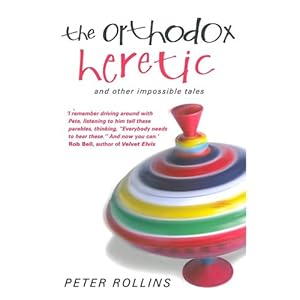
This story (from Orthodox Heretic) is a great example of what true forgiveness is. It’s so rare, today, in my experience, that I must usually qualify it and describe it as unconditional forgiveness.

Most of our forgiveness today is conditional. Whether talking of personal debt forgiveness or national debt forgiveness, political pardons or business forgiveness, interpersonal forgiveness or church forgiveness, all of our examples are conditional. They are based on the person, group, organization, or country doing something or meeting certain standards that then allow forgiveness to be bestowed or given. So what we see is forgiveness following repentance or forgiveness on the condition of repentance.

But did Jesus (I always go back to him) have a more radical message? What if he did? What if he practiced and preached an unconditional forgiveness which was unheard of in his day? I think so. Forgiveness was common and church leaders often pardoned people, but Jesus forgave people before any condition was met. He hung out with prostitutes, tax collectors, and drunks as opposed to ex-drunkards and ex-prostitutes.

This story is very close to the original. A few items are excluded and a few features changed to more clearly elucidate the message of forgiveness. Here it’s possible to see that true forgiveness (unconditional forgiveness) houses within it the power to evoke repentance. It contains the power to bring about the condition pre-required for conditional forgiveness. What if this is true? What if repentance isn’t the necessary condition for forgiveness but the natural and freely-given response to unconditional forgiveness?

In the story, the son goes home not because he’s repentant but because it’s warm and he may be able to get some work. Yet, the father has no concern for whether his son is repentant or not, not at all. His only concern is that his son is back, having no idea what his son is thinking, and no thought of whether or not his son is penitent or contrite. It’s just unconditional love. And yet it is the unconditional forgiveness born of this unconditional love that leads the son to repentance.

I received some thoughts and criticism from the last update in which I was told that there are a huge group of people (some label them liberal Christians, hippie Christians, emergent Christians, etc.) who lean too much to the side of grace (or love) and not enough to the side of truth. As a counselor, my job was to speak the truth in love, but even that truth could never be given until a deep strong relationship had first been established. And that took time. In my life experience, usually the word “truth” is used to mean “telling a person that she is wrong or doing something wrong.” And in my life experience, this usually does not work. When I’ve seen it work, usually the effects are superficial and fleeting. The only thing I’ve seen work or turn a heart is unconditional love and acceptance, not the manipulative kind that gives it as a trade to get something back, but the unconditional kind that loves and accepts because that is the best way to live and because love is what we do. Being a person who has grown up rule-bound and morally affluent (ha!), it’s hard to say this but it’s quite true. I see this every day, even now as I write. There are people in my life who want other people in my life to change but are unable to create this change through nagging, criticizing, or even truth-telling. I don’t mind truth-telling at all (I love the truth), but the biggest truth is love and love is the foundation for anything. Isn’t that the amazingly transformative power we see at work with Jesus and the Zacchaeus, a rich and wealthy tax collector who had few if any friends. Jesus befriended Zacchaeus and invited himself to Zacchaeus’s house. There was not one word of condemnation or criticism or “truth-telling.” There was truth but it was in the form of love and presence. Zacchaeus immediately gave half of all he possessed to the poor and decided to pay back any victim four times what he cheated them. That’s the power of unconditional forgiveness.

FORGIVENESS & RECONCILIATION


Donald Miller once described forgiveness in a book (Father Fiction) as not holding another person accountability for the burden you carry. I liked that description. It doesn’t mean you won’t carry a weight or that your situation has not changed due to what happened, but it means you don’t hold someone accountable for it. Here’s another story.


The Empty Exchange
by Peter Rollins

Samuel and Luka had been lifelong friends. Their relationship stretched back to when they were both children and continued through adolescence into their adult years. But their friendship really deepened when, during the war, they fought side by side in the trenches.

Yet, when they returned from the war, they both fell in love with the same woman. Although she finally married Luka, Samuel continued to harbor his own deep feelings for her.

As time went on, Samuel’s parents were tragically killed, and he inherited his family’s estate. Although now a wealthy man, he found it hard to accept the death of his parents and sought emotional support from the one woman he had always loved.

Amidst the intensity of the circumstances, a brief affair ensued between Samuel and Luka’s wife. Unable to live with the secrecy of their actions, Samuel ended the affair and confessed all. Luka, devastated by the news, looked Samuel in the eyes and said, “Before God and all the heavenly hosts, I sweat to you now that I will never accept your apology.”

These words haunted Samuel for many years, for he felt awful about what he had done and yearned to be reconciled once more with his friend. Yet he understood the pain and heartache he had caused and knew that his friend was a man of his word. Samuel knew that his friend would remain true to his vow and would never accept Samuel’s offer of repentance, even if Luka now wanted to.

Yet after years of wrestling, he decided that it did not matter whether his apology was accepted or not. What mattered was that he approach his friend and express his sorrow. So, early one evening Samuel gathered his courage and went to Luka’s house. Upon seeing Luka, Samuel fell to the ground and cried out, “Old friend, I know that you cannot accept my apology because you made a solemn oath all those years ago. But I must tell you that there has not been a day when I have not been brought low by my actions. I have never been able to free myself from this pain, and I am truly sorry for what I did.”

Luka smiled with compassion, for over the years he had come to understand that those had been dark days for everyone, and that Samuel had been suffering from great depression. So he addressed his repentant friend saying, “I made a vow never to accept your apology, and I intend to keep my word. But seeing you like this makes such an apology superfluous. Indeed, if I were to accept your apology, then this would mean that I considered you to have intentionally hurt me--something that I know is not the case. So I reject your apology as unnecessary and thus keep my vow intact, not because I wish to continue our estrangement, but so that we can truly be reconciled as brothers once more.”

After this Samuel and Luka were reunited and went on to grow old together as friends and companions once more.


This story looks at reconciliation instead of forgiveness. Whereas forgiveness was a prerequisite for repentance in “The Unrepentant Son,” here, reconciliation involves the offering of repentance as a prerequisite. In other words, Luka needed to hear the apology to know that Samuel was sorry, but Luka’s rejection of the apology meant that he understood what Samuel was going through and the circumstances surrounding the actions. In rejecting the offered gift, their friendship is restored.

Now, I’ve experienced this personally. I have a friend who felt I treated her badly. I don’t actually agree that I did anything wrong, but I was truly sorry for my offenses and had I known the actions which I deemed harmless would offend I would never have done them. I was truly penitent. What did she do? She accepted my apology in full recognition that I was a bad person. She will still bring it up today though she has accepted my apology.

Contrastingly, when someone apologies for something that I completely understand and with whom I empathize I say “No apology needed,” or “Please, it’s fine,” or “You don’t need to apologize,” or “Really, it’s ok,” or “I’m the one who should apologize to you,” or many times “I didn’t even realize I was supposed to be mad or upset. Forget it, man.” I actually find myself rejecting the apology and our communion restored.

Forgiveness is hard. Reconciliation is harder.


Starting in 2003, the government of Rwanda released tens of thousands of genocide perpetrators who confessed to what they did. There was overcrowding of prisons and a backup of court cases, so this definitely was a factor in the decision to do this, but can you imagine a government doing such a massive release of prisoners? And prisoners of genocide? Yet they did. And these perpetrators went back to their home towns. . .

This one act created an intense situation in which forgiveness was forced on the table as an option between perpetrators and families of victims. Laura Waters Hinson, a DC filmmaker, produced a film while a graduate student. It’s called “As We Forgive.” In 2008, she won the Gold Prize in the Student Academy Awards for Best Documentary for “As We Forgive.” It chronicles the life of two women who are on two different journeys of reconciliation in the aftermath of the genocide.

Laura is a beautiful woman who was able to find stories of beauty in Africa, for which I’m grateful. Through the film and her own story, she’s taught me about forgiveness and reconciliation. Check out her clip. Listen to the entire clip especially the end when forgiveness becomes personal for her.
As We Forgive Interview