Thursday, November 20, 2008

BREAST CANCER AWARENESS MONTH – Go Oprah!


It's the number one cancer for white and Asian women and the number two for black and coloured women. So it's a big deal here in South Africa. Of course, the relative development of South Africa allows it to focus on such (you can't go to Malawi and talk about breast cancer, can you?).

We have under 4,000 (the 2001 figure is 3800) diagnosed cases a year, so it's a concern for the population here. I've told you before that Oprah is huge. And apparently her magazine, Harpo, is big here. It has it's own South African version run by an entire South African magazine staff over. In face, South Africa has many version of US pop-culture magazines. Harpo is doing its part to boost awareness and make sure people are educated about breast cancer.

As a woman (whether you have it your family history or not) make sure you conduct self-breast exams regularly, receive regular mammograms, and educate yourself about early diagnosis and possible treatment options.

SEX and the CITY

We are marching on with our Sex and the City series at church.

http://www.jubilee.org.za/


There is one last installment, sermon 6, on homosexuality. It is actually the 2nd talk on homosexuality since he did the first two weeks ago (we have had 2 non-series sermons inside of the series because of events at church).

Now as you remember he has an sms system where people sms questions during the service to an anonymous phone bought by the church. Someone works at a computer at the sound desk and puts related and representative questions into Power Point. These are asks to the pastor with no preparation and he answers them on the spot after a 5 minute break at the end of the service.

Now, he says things about which I differ. And that's ok. He has said things with which different people disagree. But it has always been a minority. And people usually mention it later. When a slide went up (during the sexual brokenness talk – talk #3) asking about women and modesty in dress, he answered them quickly. He said women dress immodestly in the church. But then the final question on the slide was interesting. If I am a woman and I wear a miniskirt (or something related to that) am I responsible for causing men to sin or lust or stumble? We all thought he will say no. She is not RESPONSIBLE for causing him to stumble. Or she does not CAUSE him to stumble. But he actually said, “Actually, yes. You are responsible.” The difference this time was that the difference of opinion was now a majority of the people and it was audible in his face. “Yho!” “Uuuuuuuu” “Ai!” “ouch” “serrrriOUS” “No!” I felt bad for him, but strangely enough he wasn't phased at all and made no reaction to the noise. He didn't even respond further.

The hard part for me is that the answers to the question seem to be his views which I don't mind, but it should be presented as such instead of right/wrong. He is a hardliner and that's good, but truth is still required to say this is “what I think is best” or the “best method to avoid that”. But that's not that worrying. The hard part for me is that he answers questions (which I do all the time, as well). What do I mean? I mean that I tend to answer questions with questions (my life group hates this but they understand). It's a bit more powerful when the person reaches the answer on their own. Now when these students ask these questions “May I masturbate?” “Can I sleep at my boyfriend's house even if we do nothing?” “I'm dating a guy and we have had sex; should I break up with him?” “Is it ok to fantasize about your spouse?” etc.---people are asking for answers. But answers are not enough. When he tells the people that masturbation is wrong because it's a question of lust and he doesn't think you can do it without lusting, fine. But if that's it, you've opened up a can of worms. You are just giving the people more rules, a greater lists of do's and don't's. All I have done when I have answered such a question is to help the person feel guilty now when he or she does it. I have done nothing to equip or enable the person to follow the rule I have set. Do you see the difference. So what? I know now I am not supposed to do something; now what? I still have a desire to do it. I am no better off. I just know I am wrong when I do it.

So the problem is more rules, more lists. Instead we should be giving people a heart and a desire and to get them living on God so naturally that they do the right thing not because of a rule or list but because something is inside of them, someONE is inside of them causing it, making right living come naturally. There's an analogy a 1st century Jewish Rabbi and prophet used about vines and branches. Branches don't do a single thing to produce grapes. It's the vine that takes the nutrients from the ground and creates this life giving sap that it flows to the branches which produce grapes. The only thing the branch does is stay connected to the vine, live with the vine, dwell/remain connected in the vine.

Still I appreciate the sermon series. He's a good guy, my pastor, and he's doing something that is long overdue. His heart is in the right place. And it most importantly has people talking especially life groups. Remember people have come to me with such questions like being a virgin and marrying someone who is not or homosexuality. People are talking, engaging, and learning hopefully.


The hard part for me is that the friend who I am talking to about homosexuality made this statement. Cape Town Christians and our pastor have no ability to reach the homosexual population in Cape Town. That saddened me because of Christ was around, some of the people he would be hanging with on the streets would be homosexuals because they can be or tend to be marginalized (at least here). And he's all about he marginalized. I'm not sure when the church lost this.

So the sermon series has been a bit frustrating for him because it sometimes refers to sexuality but implicitly means sex or virginity depending on the context of the sentence. But the use of it in the sermons has sometimes fallen short of the holistic definition. In other words, my friend doesn't need to know that Christian laws/rules/lists forbid homosexual intercourse: he knows that. He needs help with how to live with that. He has prayed and it has not been taken away (some Christian former-homosexuals claim that God has delivered them from it and it is gone; they are heterosexual; this is not the case with him). So now how do I live? What can I do? Am I allowed to date?

Now when asked that question, Steve, my pastor might (pure conjecture) say “No, you cannot date.”
My approach is to ask this “What's the purpose of dating?” My friend goes on to think about it and what it's for, in his mind, and if what it leads to brings him back to marriage or sexual intercourse. I haven't said a word. I'm just asking questions. There's a difference.

That was the hard part in the series for me. In the Sexual brokenness talk, my pastor painted a picture that everyone was a soldier with an AK-47 and hand grenades on each hip with paint under the eyes and a hard helmet. And you must blow up every thought, desire. If you are at the doctor's office turn over magazines. When you walk down the street look the other way. It goes on and on. And it's good and helpful to a point. It's teaching self-control based on avoidance (a Joseph-approach). It works when you can avoid it. But it doesn't teach self-control when you can't avoid it and might leave one ill-equipped. Worse, it painted the picture of asexual beings until marriage. Watch this. Someone asked the powerful question (so powerful it was put up on the Power Point screen alone with no similar questions), “So if I remain single all my life am I supposed to forget about my sexuality? Am I not a sexual being?” Why did the person ask that? I believe it was the image that was being portrayed in the talks. Thankfully the pastor correctly said we are sexual beings and we don't just become sexual beings when we get married. Just honor God in your single-hood as well as in your marriage. The problem is that he never taught the students how to deal healthily and positively with sexual energy (See movie section on Choke). He only tells how to avoid. And it doesn't work. He tells how to deal with sexual energy in the 4th talk on Sex in marriage; he loved that talk because he seems to like sex with his wife very much. But he misses the holistic view of God and your sexuality before hand.

So strangely enough, for my friend asking questions about homosexuality, I suggested a book called “Sex God” by Rob Bell which never mentions homosexuality at all but defines sexuality and spirituality so well that it does implicitly. In trying to be active in the church and meet people, my friend started working at the book store. So he asked his boss for the book. She saw the title and thought, “Wow, 'SEX GOD!' I should order a whole bunch for all the students during this Sex and the City series.” She does. Somehow the lead pastor finds out about it, and asks to read it. He completely rejects it and tells her to return them all. He doesn't want them in the bookstore. She saved a copy for my friend. When I found out I was bothered and prayed to calm down a bit (my friend told me during the music at church). It actually is a great book for him. My pastor talks about us not being animals; we have self control. Rob says that, too. Moreover, Rob says we're not angels—we have a physicality and sexuality from God. Being human is learning to live healthily with the tension of not being animals or angels but occupying this unique place in all of creation. This part is missing in our series. Rob also talks about how to healthily deal with your sexual energy (Shane Claiborne is a great example).

It's been quite interesting. In Christianity, people tend to be on a spectrum in relation to truth and grace. My pastor (the lead pastor) is a truth guy. He follows in the footsteps of Mark Driscoll from Seattle who left the emergent movement and is a big named in the New Reformed movement (remember the update section on Christianity Today). He's not really good with grace. He does try, and he does try to bring it in. But I think it would be hard for someone to be counseled by him. As counselors, one of our aims is to speak the truth in love. Without love you are lost and are nothing but a resounding gong or a clanging symbol even if the clangs and noise you make happen to be truth. Good luck.
(to be fair it works the other way, too; all grace and no truth makes you quite culturally “in” but devoid of anything that is supposed to set you apart according to your beliefs; historically the problem has usually been truth and no grace).

I remember going to a final dinner in an Alpha course (a course for non-Christians who are interested in finding out about it). My pastor spoke and sat our table to eat. There is one inquisitive guy in the group. I was there only because (did I tell this story before or not? I'm unsure) the facilitator for this one group asked me to pray for her group. I came to meet them. So this one inquisitive guy starts drilling the pastor during our discussion time after the talk. The guy could not understand how God can know everything especially the future and at the same time we have free choice. They went back and forth, the rest of us just watching, afraid to join in (at least me). Finally my pastor just said that the Bible says both are true. God is omniscient. And we we have free will. That's it; that's all. We believe both. The problem is that people may not come from the standpoint that what is in the Bible is true, especially in an Alpha course. I decided to step in (my pastor [lead pastor] and I are around the same age; strangely he's the youngest elder/pastor but when the lead pastor died almost 2 years ago, he got the job). I explained to the guy a few things about faith. I won't write it all to you now as I'm working on a writing project on faith, but I just said that I was very happy and glad that he had doubts. Doubt is a good thing. Faith doesn't exist without (I explained more), and doubt leads to faith. It can lead to faith, anyway, not necessarily away from it. Anyone without doubt probably doesn't have true faith. So that's great. I also explained that every answer to every question will probably bring up even more new questions (which he agreed with). I said being human is the ability to be comfortable with that discomfort, to live in the uncomfortable tension of not knowing it all and never getting to that stage. That's the strange place we have been given to occupy. I said some more, but he nodded and didn't say a word after it. We were able to go on with our discussion. He always had something to say after my pastor's words. I just thought working on dual paradoxical truths of the Bible wouldn't work for him; he's coming from somewhere else.

Looking forward to Homosexuality II this Sunday.

COUNSELING

I'm in full-fledged counseling now at church. We outreach to the community. I usually work half-days on Mondays but Mondays are slow days because everyone is off since church staff work on Sundays. Only the finance guy, the graphics guy, receptionist, and one nurse is on duty. Even the clinic is not open (no doctor), and most counseling people come for both the clinic and counseling. So we don't get much business (it's free). I've only seen on HIV-counseling patient. Others have been life counseling if at all. Today I have a second male HIV-counseling patient. So we'll see how it goes. They called me in because they wanted a male even though today (voting Tuesday in the States) is not my day to volunteer. I've also started the crisis pregnancy self-modules. So we'll see how fast that goes. I'm almost done with the worksheets they gave me for two weeks (they are writing the curriculum as they go).

BLOG ACTION DAY – POVERTY - October 15, 2008


This is a day where all blog writers around the world write on the same topic in an effort to incite
and encourage a conversation about the particular topic chosen that year. This year it is poverty.
My friend, Nathanael, sitting next to me is saying write now "I have a dream. I have a dream
that one day all blog writers around the world. . ." He's making fun of me and what I'm writing.
Back to the subject.
There is so much you can say about poverty. But what's on my mind right now is this concept of liberation theology.
The older I get the more I hear about liberation theology in different places around the world. It always
amazes me how it has caught on as I always thought of it originating in the Latin American struggle
for independence and meaning under European oppression. To be honest, the original liberation theologists
were the Jewish people during their 400 years of servitude under Egyptian rule.
One of the concepts of liberation theology is God's "preferential option for the poor." Albert Nolan,
a South African theologian and writer, finds the phrase funny because he says it's not really
a preference. It just means God sides with the poor, the down-and-out, the homeless,
the sick (any of this sound like anyone you know?),
the imprisoned, the ex-con, the prostitute, the pimp (anything familiar yet), the marginalized, the forgotten,
the untouchables, los desaparecidos, the invisible (have you seen people like this?), the lower class,
the despicable, the disease-stricken, the ostracized, the quarantined (anything yet), the foreigner, the
stranger, the widow, the orphan, the homosexual, the least of these. This is plain to see.
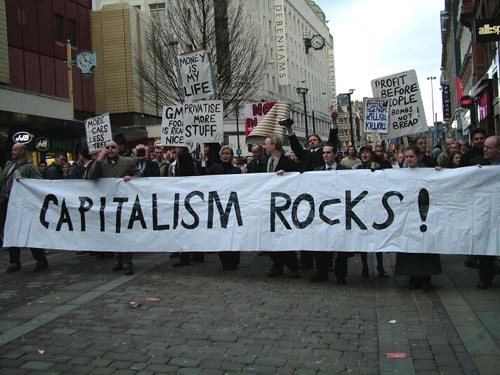
But what do we do with poverty around us especially in this great competition between capitalism
and communism? You see it's hard to have an actual even-sided debate on capitalism and socialism
and communism in the U.S. because there is a strong revulsion against communism in the United
States. But the amazing thing is that they both fought and fight for the same thing--freedom! Both
have the same end--to free people. Listen to me carefully here. The greatest failure, downfall, and mistake
of communism is not in its ideal and hope; its greatest mistake was that it forced people to share.
Did you catch that? Let me repeat: the failure of communism is that it forced people to share.
And people don't want to share.
This is especially true in rich countries. If you stand up and talk about some type of wealth
distribution or way to help the poor with money, in the US people label you as a communist
or a socialist. This greatly bothers me because such name-callers are trying to label people
with a term that sounds bad; it has a negative connotation. But what is the heart of the
person being called a communist: she wants to help the poor. Why is she being called
a communist or a socialist? People don't want to share. Communism forced this.
But we live in a time where the highest value in the Western societies is individualism.
I did it my way. I did it on my own. I did it myself with good, hard work. And good hard
work is wonderful, but we have lost the communal aspect and the communal identity (key
word) of age-old societies and of a simpler life. We're in a time of hyper-capitalism if you will.
Why should I share what I worked hard for on my own? I earned it. Besides that poor person
is a drunk.
Did you know that a preferential option for the poor actually means God sides with the poor
and the marginalized, the widow and the orphan, the ostracized and the unloved automatically?
Watch this. A preferential option for the poor means the side of the poor is just (always right)
no matter the morals, education, or state of a particular poor person. A preferential option
for the poor also means the side of the rich is unjust (always the wrong side) no matter how unaware
or sincere rich people are.
That's a lot to take in. We often discriminate between people and decide not to help poor people
because of their state, their lack of education, their motivation, their alcohol or drug content, etc.
Preferential option for the poor is not dependent on that. Moreover, how many rich people (or
just well off people) do we know that are not AWARE that the policies and actions benefit
themselves but not the "least of these," the marginalized. Even if the rich people are sincere,
it doesn't mean favoring them over the poor is just. Even if the rich people don't even know they
are rich (like some of us). For me, one of the unknown shortcomings about Clinton's presidency
was the favoring of the middle class but no plan or greater emphasis for the lower class. That's
why it's hard for a Jon Edwards to get elected though he focused on the lower classes: the poor
do not have a voice. They have the lowest percentage of registration and voter turn-out.
They need a voice and an advocate.
So communism forces people to share. Capitalism ignores them all together. In neither
case do people want to share, whether forced (communism) or not (capitalism).
One of the things I have been re-excited about is Jesus. I have been studying him but not
the usual, banal, overdone, hackneyed studies. I'm really delving into the Politics of Jesus,
the Economics of Jesus, the Spirituality of Jesus, the Holistic Healing of Jesus, etc. In Christianity
if you begin to question that God is for all the people listed above, the people on the fringes of
society without a voice, without hope, and without help, one is supposed to look at Jesus because
he is considered God incarnate. We believe he was and is God. So when we see his heart we see God's heart.
I didn't realize how truly amazing he was. Am I allowed to say that? I mean people tell you,
but you don't get the full import or impact until you travel back in time and enter his context.
He truly brought a revolution, an "upside-down" revolution as many people term it. And do you
know what? I think it was genuine. Take a look at what a 1st century doctor
recorded about his followers after his death.

They devoted themselves to the apostles' teaching and to the fellowship, to the breaking of bread and to prayer. Everyone was filled with awe, and many wonders and miraculous signs were done by the apostles. All the believers were together and had everything in common. Selling their possessions and goods, they gave to anyone as he had need. Every day they continued to meet together in the temple courts. They broke bread in their homes and ate together with glad and sincere hearts, praising God and enjoying the favor of all the people. And the Lord added to their number daily those who were being saved.
So that's what I've come to realize is so amazing. He did was capitalism ignored and communism forced--people shared, and they shared of
their own free will.
So when discussing the troubles of Uganda with my students in 2007, I asked if all this war, hate, rape, etc. attributable to governments, institutions, conditions (meaning you can change and end it all by putting in place systems and good governance) or will it always be here because it's not a problem of countries and governments it's a problem of the human condition (meaning it's an individual problem with being human). Some said it was not an individual problem; these were just bad countries and institutions that needed better laws and better institutions. Others said it's a problem with humans.
May I say what it is though you may disagree? It's a problem of the human condition. All of us who work in development and aid and relief know that we can never wipe out war and gang rape and crime and abuse and child soldiers with laws and good judges and our work alone. Even if we change the hearts of a few people, new people will rise up and take their place. New people come into office. People replace people. It's an individual human problem. And the only way to solve it is a revolution
on an individual basis. That's what Jesus did. He didn't use government. He just loved people, and it spread. You have to change individual people. And as long as you don't reach all the people in the world, new people unreached will come into their place and we will still have the same problems.


This is an upside-down revolution, one person at a time, but if it catches, it's like no other. Shane Claiborne said it best--Jess's revolution makes capitalism obsolete and communism unnecessary.
But it's not enough to talk about the need to work for those on the fringes. What do we do now?

WORLD FOOD DAY – October 16, 2008


Most of the hunger today is related to poverty. So one way to do something for the poor is to help with hunger. With under a billion people lacking access to safe, clean drinking water and over 900 million go hungry each day, about the same number. There is much to be done whether internationally or in our own backyards.

I was downtown on Saturday (the 1st of November) after a canceled sunset cruise and I saw a homeless girl. I smiled because I knew her from before. It's weird to say but it was good to still see her on the street, to know she was alive and kicking. We went through our routine again. We walked to the store and I bought her cornflakes and milk. This time she needed tampons. She was embarrassed about this so when the clerk rang the order up, she put them under her shirt. When that didn't fit she put it in the sleeve of her jersey (sweatshirt in the U.S.). The first time we met, she smiled when she realized I was an American. People like Americans. . .well some people do. She did. Though she needs an immediate temporary solution, she also needs a permanent one as well. Again I'm not sure what to do about her.

But there are things you can do. One of my favorite groups (definitely not the only one, and in no way will I call them the best) is World Vision.

http://www.worldvision.org/
http://donate.worldvision.org/
http://www.bread.org/

I love their heart. So check them out, and if you would like to give give.

There are some things you can do.


You can donate.
You can give monthly support.
You can sponsor a specific child.
You can start a food drive or a hunger drive.
You can organize an awareness campaign at your work or school.
You can host a hunger night in your community and speak or invite people to come and speak.

The list goes on. Get creative.

Here are some facts and figures on hunger:
http://www.bread.org/learn/hunger-basics/hunger-factsinternational.html

SOUTH AFRICA


Last week, the final year students began writing their matriculation (“matric”) exams. These exams are different than final exams in the U.S. They are separate from high school graduation. Here after finishing high school and having a ceremony (if your high school has a graduation ceremony) you write nation-wide exams in every subject you studied. You need to pass matric exams to enter university. It's a bit like the SAT or ACT in the U.S. except the students here take 2 or 3 English exams, 2 or 3 French (or any foreign language), 2 or 3 physics (or another science), 2 or 3 maths, 2 geography, etc. Students can have 10 exams or even 14 exams. They space them out and take them for about a month or so only going to school when they have an exam; otherwise they stay home as they must finish their final year early because of the matric exams (they start before final exams of Grades 11 and below).

What is special this year is that this is the first matric exams under the outcomes-based curriculum. People hate this curriculum (similar to objective-based versus marks-based) and blame it for students' general lack of competence in many subject areas. My unexperienced opinion is that whether or not it is the best system, it is probably a question of implementation. It has been poorly implemented as it requires extra care to make sure the students are competent in all content mastery topics/areas. Either way we have children that graduate and struggle to read. It's a problem. So the country waits with bated breath to see what will happen. This is the first matric exam set under the new system and we hope at least to have the same number of students pass as last year.

We're battling climate change and even future water stress (we're slated to be one of the countries hardest hit by the upcoming water shortage say around 2025, according to the World Wildlife Fund [WWF]). But the most immediate health and environment concern this month was a new virus that showed up. Four people have died from some sort of hemorrhagic fever. They died in the Joburg area. But the unknown fever has been finally named: it is a member of the arenavirus family. Originally
the National Institute for Communicable Diseases (NCID) wanted to name it after Lusaka where the first victim came from, but Zambia doesn't want the stigma attached to its capital city, so Bob Swanepoel of the NCID is going back in history to find the “putative” name. This new virus could be the result of two known arenaviruses coming together. The fifth infected person is recovering. Hopefully the virus was contained.

The former defense minister “Terror” Lekota (named Terror for his younger soccer days) has resigned from the party over the past month and started a break-off group from the ANC. He has been critical of the ANC's criticism of the courts (when judges do not rule in Zuma's favor) and of the direction of the party. He had a conference last weekend. It was amazing to see normal everyday citizens get in buses and vans and drive to be delegates in this new party forming. For the first time South Africans are beginning to see that they may one day live in a country with competitive politics, and this is exciting. They look at the U.S., and relative to what we have here, they see the race between McCain and Obama as exciting. As my lovely friend Eliza Choo (studied development/IR and has a beautiful heart for Africa; based out of NJ) suggests, political races are likes sports matches, “you like it when they are close.”

Inasmuch as this is true, then they are moving closer towards a democracy. You see the problem that plagues South Africa and the U.S. is the settling of something less than true democracy. In the U.S., the people are considered as dumb or not so intelligent by the rest of the world. Americans are told what to believe and think and they follow and listen. The ability to think, I mean to really think critically, independently is lost. So if five people want to run for president, American people focus on the two the media focus on—the Democratic and the Republican candidate. This is one of the reasons I wish there was a government fund for candidates, a fund that was minimal. Or I would even be happy with a limit. Each candidate gets two commercials that can be run throughout the campaign and no more. Debates are equally accessible to all candidates, and no petition-list barriers for third party candidates. I would love to see a race where all candidates are considered equally. Because what's missing are ideas. In the REAL world, there are more to two sides to MOST issues, yet the media does this spin doctoring thing that presents it as two sides that can never agree because that makes good TV (so they work things out in the pre-interviews for the political commentary; guess what happens if both guests want a bi-partisan solution with non-partisan rhetoric?). Democracy means everyone has a voice. It means voices, MANY voices. Is that what is in the U.S.? That's the question to ask yourself. It's especially troublesome when parties become very similar; they receive financial support from the same groups and companies. Both parties forget the same people: one focuses on the wealthiest Americans, the other on the middle-class. Both forget the guy at the bottom. One blames poverty on lack of values and wants to fight it with money for marriage and family programs. One wants to focus on social programs that temporarily help people's immediate needs. Why not both? Why not also take care of people's immediate needs while addressing the root of the problem that is causing this?

If you ever lose the multiplicity of voices, no matter if you have free and fair elections, you have lost a democracy. So South Africa sits in the same boat; although its boat is developmental or structural. There is one dominating party that dominates because it liberated not because it governs well. There is a subtle difference, but they have been riding the residual wave for 14 years. This moment was due to happen, and it is the natural course of events for such new democracies. But it's still at the point where you know which party will win. There is no surprise. There is no anticipation. It's one voice. South Africa is so dominated by one voice that opposition groups are opposing only because they are against something and not for something. This is dangerous. If you are against something you simply re-establish the notion that there is always that minority faction of discounted people, the “nu-silent minority”, the complaining company. It's expected. Therefore it is dismissed. When, instead, you offer an alternative, a viable alternative, you actually force those in power to think and question and decide what is best. At the very least, they have to answer.

So when Bekki resigned and people said it was good for democracy and I didn't see it, perhaps they were right. If they foresaw a new party forming and if they were referring to that, then it is true. It's good for democracy.


Right now there has been controversy over a letter from Bekki to Zuma. It was read last week by the ruling party's secretary who selectively quoted it making it sound like Mbeki was distancing himself from the new party. Now the letter has come out in public—Mbeki was, in fact, refusing to be involved with the ANC's run in the 2009 elections and its internal politics, implicitly defending the new breakaway party, and implicitly attacking Zuma calling the ANC a personality movement which is what ANC members accused Mbeki of leading (Mbeki referred to the Youth League's leader's comments about killing for Zuma).

So drama, drama, and more drama. My guess, judging from now, is that the breakaway party won't have enough support to win next year, but by 2014 (we vote every 5 years for presidential races) I think it will be a viable alternative. Let's hope they get a platform together about what they support.

AFRICA

Zambia had its elections after the death of President Mwanawasa. But there are accusations of fraud, corruption, and vote-buying by Banda who was the president stand-in until the election, and the deputy under Mwanawasa, and now the newly elected president.

I'm a bit glad I've lacked computer access, some free time, and updates have been deleted related to the Zimbabwe elections. If not you would have seen me say repeatedly that an accord would be reached. And each time, I would tell you that it was not and the unity-government talks have stalled over cabinet portfolio allocations. Mugabe has finally yielded the finance ministry to Tsvangirai and the MDC. But Mugabe wants at the very least to share Home Affairs; he won't concede it. Tsvangirai says without Home Affairs there is no balance in security ministries between Zanu-PF and the MDC. So we are currently at a stalemate. This week is the SADC summit, but the MDC is prepared to take it to the AU afterwards and all the way to the UN (SADC – South African Development Community, AU-African Union, UN—you should know this one—United Nations).

I know it's hard for him, too. Imagine. Mugabe is a guy you once admired and supported. Continually over the years you have had to distance yourself from him, and his group have physically beaten you badly many times. Now you win (educated guess on my part) the election. You agree to compromise and run in run-off.

Too many of your people are being beaten, killed, raped, intimidated, and vandalized. You pull out of the run-off (you wouldn't win the unfair run-off anyway). But you compromise and agree to a joint unity government.

Then in the unity government talks you are not allowed to have control of the MAJOR ministries whose mismanagement put your country in the mess it's in. People are currently dying, starving. Aid is needed and quickly. Companies and investors need to return to the country and to do this you need control of key ministries including finance, home affairs, local government, foreign affairs, etc. Which do you take? Which do you yield? What about the military and the police (local government)? Do you again compromise?

The toughest event to hit my heart is the fighting in the eastern region of Congo. It hurts for a number of reasons. It's hard to understand because it's complex. People are dying. People are being raped. People are displaced. Refugees are on the run, again. And part of it is Hutu-Tutsi fighting, again. This is why I believe so much in people who are doing Hutu-Tutsi and race-relations reconciliatory work in Uganda, Rwanda, Congo area. We need it badly.


http://www.invisiblechildren.com/news&press/news/detail.php?pID=1941921909

First, the Lord's Resistance Army (LRA) is at it again. The peace talks failed, and they were never signed months ago. Now they are again raping and killing and abducting children to be child soldiers, this time in Southern Sudan and northeastern DRC. Surprisingly, DRC local villagers are fighting back with their own local organized groups. But a bigger and older problem (for the DRC) still pervades. Over a million people have been displaced and there have been gender-based violence in rape since August 2008. Hutus and Tutsis have been fighting again. And this has been happening since the First and Second Congolese Wars (1994 and 1998).

After the First Congolese War in 1994 (60,000 civilians died), Rwanda-supported Laurent Kabila kicked out Mobuto Sese Seko (The former president of the DRC). When Kabila became president he kicked out all Rwandan military in the DRC and even fired his Rwandan chief of staff. So tension increased until Tutsi-led Rwandan and Ugandan troops backed an uprising around Goma (eastern DRC city in the valley of a volcano) called the Rally for Congolese Democracy (RDC). Kabila, in turn, recruited Hutus in anti-Tutsi retaliation leading to public lynchings in Kinshasa. And things have gotten worse since then.

The RCD, Rwandan, Ugandan, and Burundian forces took more and more of the country. So Kabila got help from Zim, Namibia, and Angola, and then reinforcements from Chad, Libya, and Sudan. With all these forces converging we had the Great African War from 1998 – 2003. This is normally why DRC people tell me there is no more fighting in DRC because this war ended in 2003. But there has been continued fighting, or let me say it has just restarted. Even with the peace agreements signed in 2008 in January (the Goma Agreement) in which 22 armed forces agreed, there have been over 200 violations according to UN monitoring groups and Amnesty International. This is because there are so many groups involved and they all have different interests and they sometimes work against each other or towards cross purposes.


You may be confused at what I just wrote about ethnic clashes and national clashes, so let me help a bit more. There are three situations going on at the same time. First is the LRA now moved into the northern and northeastern border of the DRC.


Then there is fighting between the Congolese army and Tutsi rebels (sometimes referred to as Congolese Tutsis in newspapers or journals). There is a man named General Laurent Nkunda, an evangelical Tutsi, leading this rebel group nicknamed “Rebels for Christ”. The actual name is Congres Nationale de la Defense du Pays (National Congress for the Defense of the Country). Nkunda's sacred mission is defending the honor of the Congolese Tutsi. He defected from the Congolese army in 2005 and settled in North Kivu where 23,000 have been displaced. He blames the government but eyewitness accounts have seen his own forces initiate conflict. So his Congolese Tutsi rebels are fighting with the Congolese army.

The third problem and probably the root of the fighting (related to the Congolese Tutsi rebels) is the Democratic Forces for the Liberation of Rwanda (FDLR), composed of Rwandan military and Hutu extremists responsible for the genocide in 1994 in Rwanda. Now (stay with me), twice Rwandan Tutsi forces have crossed the border to finish off the FDLR. Last year in 2007, the DRC agreed to get rid of the FDLR out of the border area, but they seem to be doing little to make it happen. The Economist reports that the FDLR and the DRC government collude to reap benefits from the mineral trade in North Kivu.


The problem with Rwanda and the previous peace talks is that there has been no component related to the FDLR. No Western forces is pressuring Rwanda to do so. The FDLR wants to be incorporated into Rwandan politics as a legitimized political party, but Rwanda refuses. A South African professor says that is the same thing as saying the status quo (with all the killing and fighting) is ok. The January peace deal only dealt with General Nkunda's rebellion. But even that peace deal failed.

The real surprise is the inability of the peace-keeping troops to do anything. The peace-keeping unit at one time increased to 17000 (the highest UN allocation anywhere in the world) but they are still unable to handle the situation. The UN has its hands full with Sudan and cannot even get all promised troops there. So more troops for this region is unlikely for the time being.